
Best Wireless Keyboards 2026
A category-specific approach to ranking Wireless Keyboards
Most general product roundups are built around broad buyer priorities. Flickthru evaluates wireless keyboards for home-office and business users, prioritising typing comfort and feel, wireless connectivity and reliability, battery life and charging, build quality and durability, and layout and productivity features.

Keychron Q6 Max
Keychron’s flagship full-size custom board pairs a CNC-machined aluminum gasket-mount case with hot-swappable switches and QMK/VIA firmware, so the layout, sound, and feel can all be tuned without soldering. It’s built for people who want a mechanical keyboard as durable and premium as a desktop peripheral gets, and are happy to pay full-size prices for it.
- CNC-milled aluminum gasket-mount case feels substantially heavier and more solid than plastic competitors
- Hot-swappable switches and full QMK/VIA support let you rebuild the typing feel and remap any key without soldering
- Triple-mode connectivity covers wired USB-C, Bluetooth, and a 2.4GHz dongle in one board
- Full-size aluminum construction makes it heavy and less travel-friendly than lighter 75%/low-profile boards
- Commands a premium price versus plastic-cased alternatives with similar core features
Q6 Max takes the top spot on the strength of its build quality and software flexibility together — no other board in this list combines a full CNC-aluminum case with hot-swap sockets and complete QMK/VIA remapping. That pairing is what separates it from the V6 Max just below it: same design language and firmware support, but a case and switch feel that noticeably outclass the plastic competition.
The gasket-mounted aluminum case gives the Q6 Max a noticeably deeper, more cushioned keystroke than plastic-cased boards in this list, and the hot-swap sockets mean switches can be swapped in minutes to fine-tune sound and feel. Triple-mode connectivity (USB-C, Bluetooth, and 2.4GHz) covers wired and wireless use without extra dongles cluttering a desk.
- Buyers who place the highest priority on value for money
- Buyers who place the highest priority on ergonomics and portability
| Form Factor | full-size premium mechanical |
|---|---|
| Configuration Note | Specifications vary by switch, color or layout where offered; exact configuration should be confirmed before purchase. |

Keychron V6 Max
The V6 Max carries over the Q-series’ gasket mount, hot-swap sockets, and QMK/VIA compatibility into a more affordable plastic-cased body, making custom-keyboard features accessible without the Q-series’ aluminum price tag. It’s the pick for buyers who want the tinkering flexibility of a premium board on a tighter budget.
- Same hot-swap sockets and full QMK/VIA remapping as the pricier aluminum Q-series
- Steel plate construction keeps typing feel closer to premium boards than most plastic keyboards at this price
- Triple-mode wireless (USB-C, Bluetooth, 2.4GHz) matches the flagship’s connectivity
- Plastic case doesn’t match the Q6 Max’s rigidity or acoustic depth
- Lighter build means less resistance to desk shifting during fast typing than the aluminum model
V6 Max ranks just behind its aluminum sibling because it keeps the Q6’s most valuable features — hot-swap, full VIA/QMK remapping, triple-mode wireless — while giving up case rigidity and some acoustic depth for a meaningfully lower price. It edges out the scissor-switch Logitech boards below it specifically because of that remapping and hot-swap flexibility, which neither MX board offers.
Swapping the aluminum case for a plastic-and-steel-plate build keeps the V6 Max’s core feature set — gasket mount, hot-swap, VIA remapping, triple-mode wireless — while meaningfully lowering the price. The steel plate adds enough heft that the typing feel stays closer to the pricier Q-series than most budget boards manage.
- Buyers who place the highest priority on ergonomics and portability
- Buyers who place the highest priority on battery life and charging
| Form Factor | full-size value mechanical |
|---|---|
| Configuration Note | Specifications vary by switch, color or layout where offered; exact configuration should be confirmed before purchase. |

Logitech MX Keys S
Logitech’s flagship low-profile wireless keyboard trades mechanical switches for spherically-dished scissor keys that stay quiet enough for open offices and video calls, backed by smart backlighting that turns on as your hands approach. Easy-Switch lets it pair with up to three devices and hop between them with a single keypress.
- Quiet, low-profile scissor keys are noticeably less distracting on calls than mechanical alternatives
- Easy-Switch pairs with up to three devices and swaps between them with one keypress
- Proximity-sensing backlighting turns on automatically as your hands approach and dims when idle
- Scissor-switch feel lacks the tactile feedback mechanical-switch typists prefer
- Logi Options+ software is required to unlock full customization, an extra install some buyers skip
MX Keys S lands ahead of its mechanical sibling primarily on typing comfort in shared spaces: the quiet, low-travel scissor keys and proximity-sensing backlight are tuned for calls and open offices in a way no mechanical board here can match. It ranks below the Keychron pair because it trades that quietness for zero hot-swap or remapping flexibility.
The dished, low-travel keycaps are tuned for fast, quiet typing rather than tactile feedback, which makes the MX Keys S better suited to shared or call-heavy workspaces than to enthusiast typists. Logi Options+ adds per-app shortcuts and Smart Actions, and the proximity-sensing backlight is a genuine convenience rather than a gimmick — it dims automatically when your hands leave the keys.
- Buyers who place the highest priority on value for money
- Buyers who place the highest priority on battery life and charging
| Form Factor | low-profile full-size wireless |
|---|---|
| Configuration Note | Specifications vary by switch, color or layout where offered; exact configuration should be confirmed before purchase. |
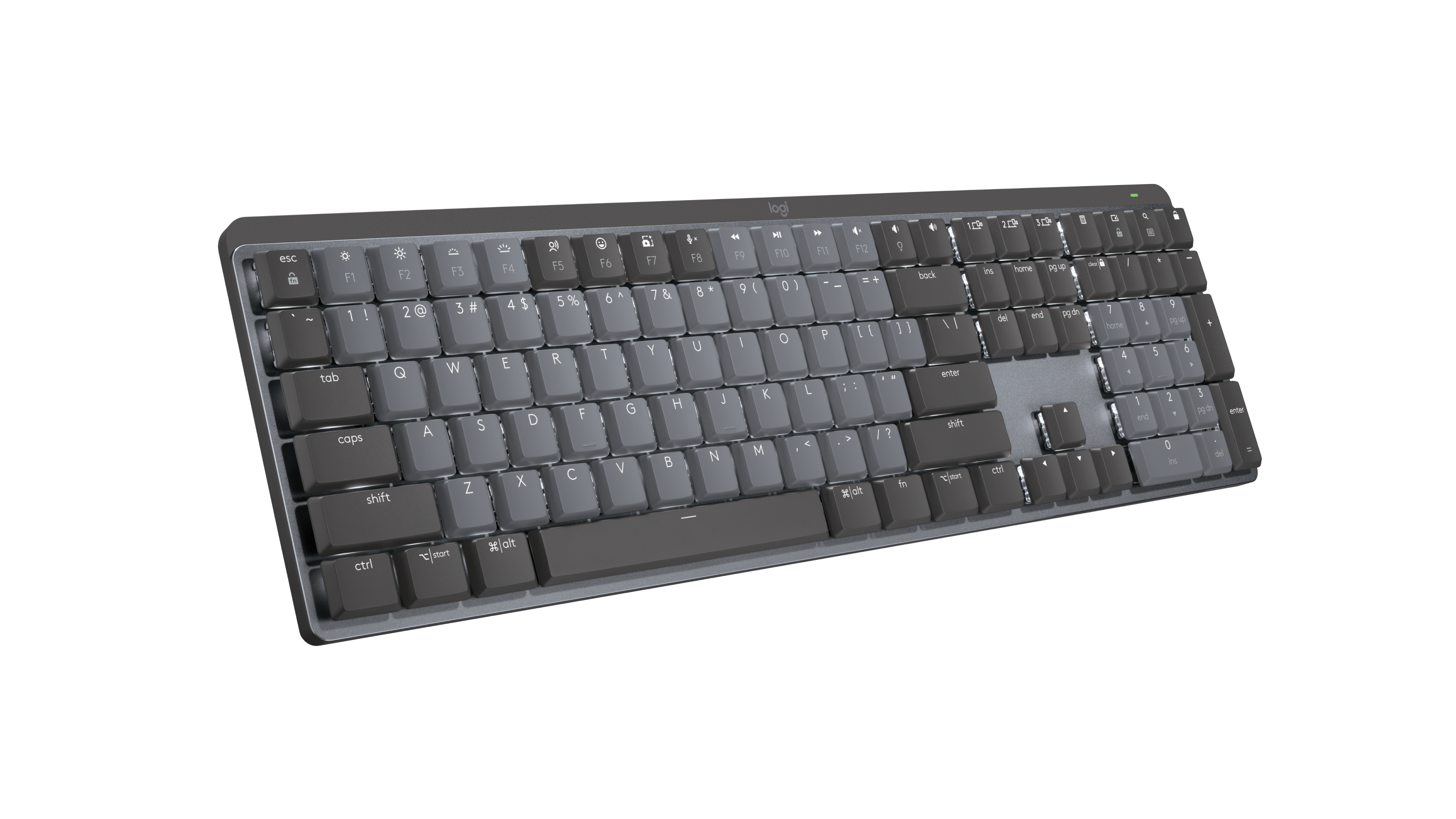
Logitech MX Mechanical
This is the MX Keys S’s mechanical sibling: the same low-profile body and multi-device Easy-Switch system, but with a choice of low-profile tactile, clicky, or linear switches underneath. It’s built for typists who want real mechanical feedback without the taller, louder full-height switches most mechanical boards use.
- Low-profile mechanical switches (tactile, clicky, or linear options) give real tactile feedback in a slim body
- Easy-Switch and Logi Options+ carry over the MX Keys S’s multi-device pairing and shortcut customization
- Backlit keys with the same proximity-sensing behavior as the MX Keys S
- Switch type is fixed at purchase — no hot-swapping to try a different feel later
- Costs more than the scissor-switch MX Keys S for buyers who don’t specifically want mechanical feedback
MX Mechanical sits just behind the MX Keys S because low-profile mechanical switches add real tactile feedback at the cost of some of that model’s quietness and a higher price for a similar feature set. It still outranks the boards below it on the strength of Logitech’s Easy-Switch multi-device pairing paired with genuine mechanical feel, a combination few competitors offer together.
Because the switches are low-profile rather than standard-height, the MX Mechanical types with a shorter, snappier stroke than most mechanical keyboards while still giving clear tactile or clicky feedback depending on the switch chosen at purchase. It shares the MX Keys S’s Easy-Switch multi-device pairing and Logi Options+ software, so day-to-day workflow customization is identical across both boards.
- Buyers who place the highest priority on value for money
- Buyers who place the highest priority on ergonomics and portability
| Form Factor | full-size low-profile mechanical wireless |
|---|---|
| Configuration Note | Specifications vary by switch, color or layout where offered; exact configuration should be confirmed before purchase. |
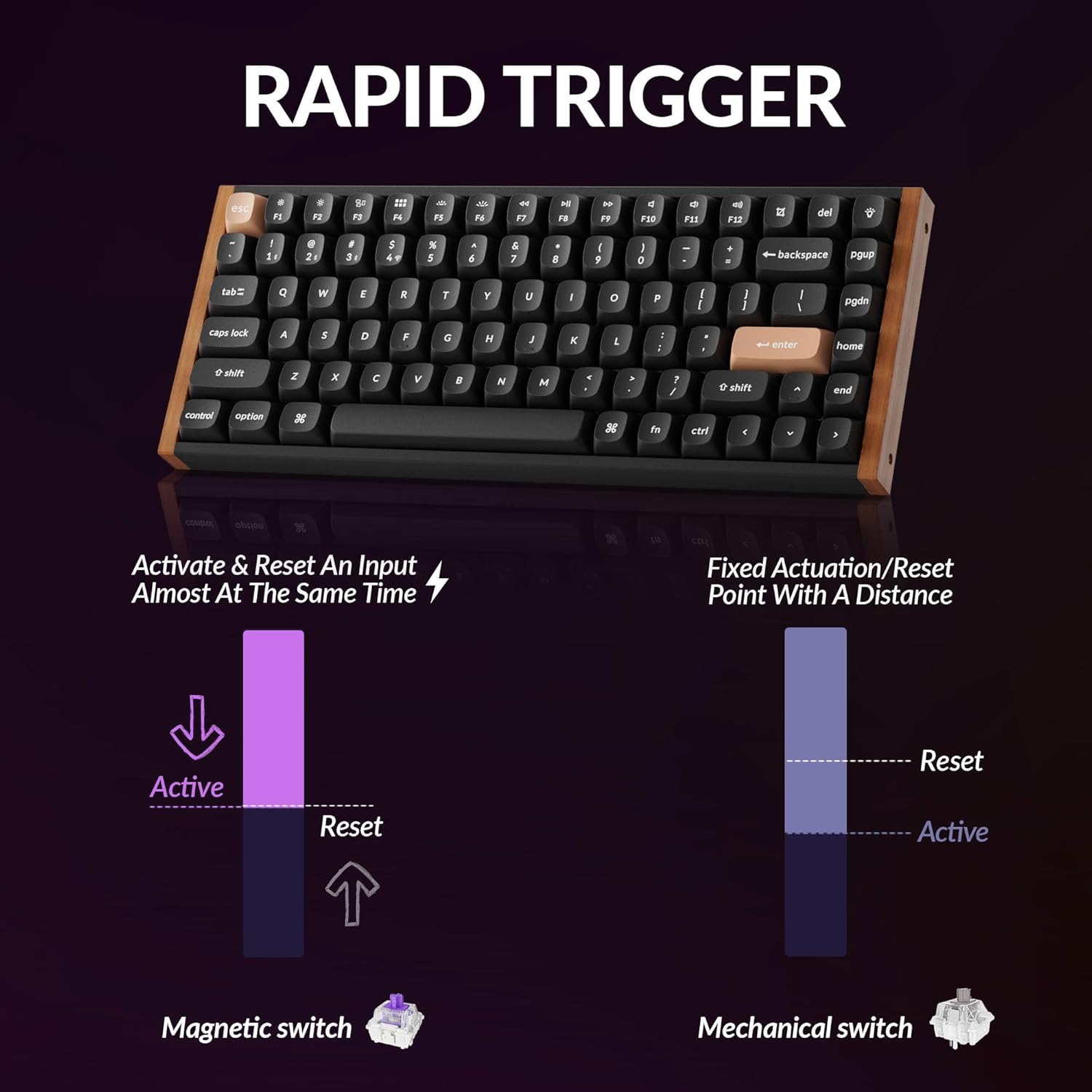
Keychron K2 HE
A 75% wireless keyboard built around Gateron’s double-rail Hall-effect magnetic switches, which let each key’s actuation point be tuned from 0.2mm to 3.8mm through Keychron’s Launcher software. That adjustability is aimed squarely at gamers who want rapid-trigger response, but it works just as well for typists who prefer a very light or very deliberate keypress.
- Per-key actuation point is adjustable from 0.2mm to 3.8mm, a feature standard mechanical switches can’t offer
- 1000Hz polling and low-latency 2.4GHz wireless keep response fast even off the wire
- Foam dampening and pre-lubed switches give a noticeably quieter, softer sound than typical hot-swap boards
- Compatible exclusively with Gateron’s own double-rail magnetic switches, ruling out third-party hot-swap experimentation
- 75% layout drops the numpad, a real trade-off for spreadsheet-heavy work
K2 HE earns its rank for a feature nothing else in this list offers: per-key actuation adjustable from 0.2mm to 3.8mm via Hall-effect magnetic switches, which matters most to gamers wanting rapid-trigger response. It ranks behind the full-size boards above it mainly because the 75% layout drops the numpad, a real trade-off for spreadsheet-heavy work.
Because the magnetic switches read analog distance rather than a fixed contact point, actuation depth is fully adjustable per key rather than fixed by the switch itself — a real capability gap versus every standard mechanical switch in this list. Triple-mode connectivity (2.4GHz, Bluetooth 5.2, USB-C) and 1000Hz polling keep latency low in wireless mode, and the pre-lubed switches with foam dampening give a softer, quieter sound than typical hot-swap boards.
- Buyers who place the highest priority on ergonomics and portability
- Buyers who place the highest priority on battery life and charging
| Form Factor | 75-percent wireless Hall-effect mechanical |
|---|---|
| Wireless Requirement | Bluetooth, proprietary 2.4 GHz receiver, or both |

NuPhy Air75 V3
NuPhy’s Air series built its reputation on making low-profile mechanical keyboards that are actually thin, and the Air75 V3 continues that with a gasket-mounted aluminum frame under hot-swappable low-profile switches. It’s aimed at buyers who want a genuinely slim, portable board without giving up hot-swap flexibility.
- Low-profile hot-swappable switches keep the case meaningfully thinner than standard mechanical boards
- Gasket-mounted aluminum frame gives a softer keystroke than most low-profile keyboards manage at this thickness
- Triple-mode wireless makes it equally suited to a fixed desk or working on the move
- Low-profile switch selection is more limited than standard-height hot-swap ecosystems
- Thinner case trades some of the acoustic depth full-height boards like the Q6 Max deliver
Air75 V3 is the thinnest board in this list by a clear margin, which is exactly why it ranks where it does — buyers choosing it are prioritizing portability and desk footprint over the acoustic depth and switch selection that keep full-height boards ranked above it. Its gasket mount still gives it an edge over rigid low-profile competitors at a similar thickness.
The low-profile switches keep the Air75 V3 meaningfully thinner than every other board in this list, while the gasket mount still gives a softer keystroke than the rigid, non-cushioned low-profile boards common at this thickness. Triple-mode wireless connectivity means it works equally well tethered at a desk or paired over Bluetooth on the move.
- Buyers who place the highest priority on value for money
- Buyers who place the highest priority on ergonomics and portability
| Form Factor | 75-percent low-profile mechanical wireless |
|---|---|
| Configuration Note | Specifications vary by switch, color or layout where offered; exact configuration should be confirmed before purchase. |
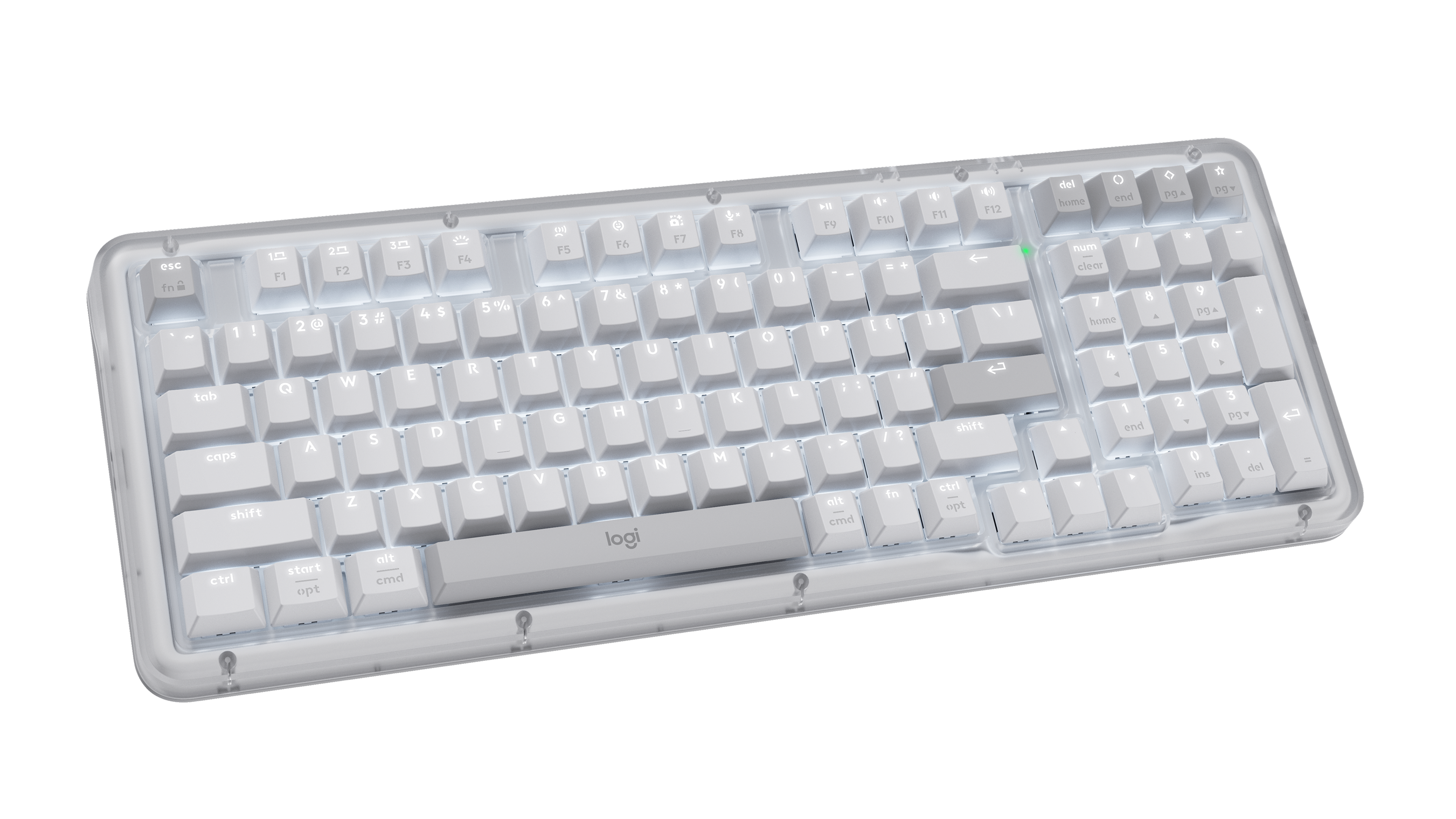
Logitech Alto Keys K98M
Logitech’s return to hot-swappable mechanical keyboards wraps a full 98-key layout in a translucent UniCushion gasket-mount case designed to soften both the sound and feel of every keystroke. It ships with light, 40-gram Logi Marble linear switches aimed at buyers new to mechanical keyboards, but the hot-swap sockets leave room to try something else later.
- UniCushion full-frame gasket mount audibly softens keystroke sound versus Logitech’s earlier mechanical boards
- Hot-swappable switches and PBT keycaps are rare at this price from a mainstream brand
- Up to roughly a year of battery life with backlighting off, per Logitech’s own rating
- Customization is limited to a handful of programmable action keys — no VIA/QMK-level remapping
- 98-key layout is more compact than a traditional full-size board, which some numpad-heavy users may not want
Alto Keys K98M ranks here as the most accessible entry point into hot-swappable mechanical keyboards from a mainstream brand — its UniCushion gasket mount and light Marble switches are aimed at typists moving off membrane keyboards for the first time. It sits behind the Keychron and MX boards above because its customization stops at a handful of action keys, without VIA-level remapping.
The UniCushion full-frame gasket noticeably softens the K98M’s typing sound compared to Logitech’s older rigid-mount boards, and reviewers have specifically praised the light, consistent 40-gram Marble switches as an easy on-ramp for typists moving from membrane keyboards. Wireless coverage runs up to about a year on a charge with backlighting off, over Bluetooth or the bundled Logi Bolt receiver, with three Easy-Switch shortcuts to jump between paired devices.
- Buyers who place the highest priority on ergonomics and portability
- Buyers who place the highest priority on battery life and charging
| Form Factor | 96-percent mechanical wireless |
|---|---|
| Configuration Note | Specifications vary by switch, color or layout where offered; exact configuration should be confirmed before purchase. |
ASUS ROG Azoth
ROG’s flagship 75% gaming keyboard pairs a gasket-mounted case and hot-swappable, pre-lubed switches with a small OLED display for at-a-glance system stats or custom animations. It’s built for gamers who also want the tactile refinement and customization options usually reserved for enthusiast typing boards.
- Gasket-mounted case with factory pre-lubed, hot-swappable switches feels notably smoother out of the box than typical gaming boards
- Onboard OLED display for system stats or custom animations, a feature unique to this board in this comparison
- Triple-mode wireless connectivity suits both competitive gaming and everyday typing
- Among the most expensive boards in this list, with value scoring reflecting that premium
- Software customization leans toward ASUS’s Armoury Crate ecosystem, a steeper learning curve than simpler competitors
ROG Azoth ranks here largely on the strength of two features unique to this list: a gasket-mounted case with factory-lubed switches, and an onboard OLED display for stats or animations. It falls below the more affordable boards above it mainly on value — that premium build and screen come at one of the highest prices in this comparison.
The gasket mount and factory-lubed switches give the Azoth a smoother, more premium feel out of the box than most gaming keyboards, which typically ship with looser tolerances tuned for cost rather than feel. The OLED display is a genuine differentiator in this list — no other board here offers an onboard screen — though it adds to an already premium price.
- Buyers who place the highest priority on value for money
- Buyers who place the highest priority on compatibility and software
| Form Factor | 75-percent wireless mechanical gaming |
|---|---|
| Wireless Requirement | Bluetooth, proprietary 2.4 GHz receiver, or both |
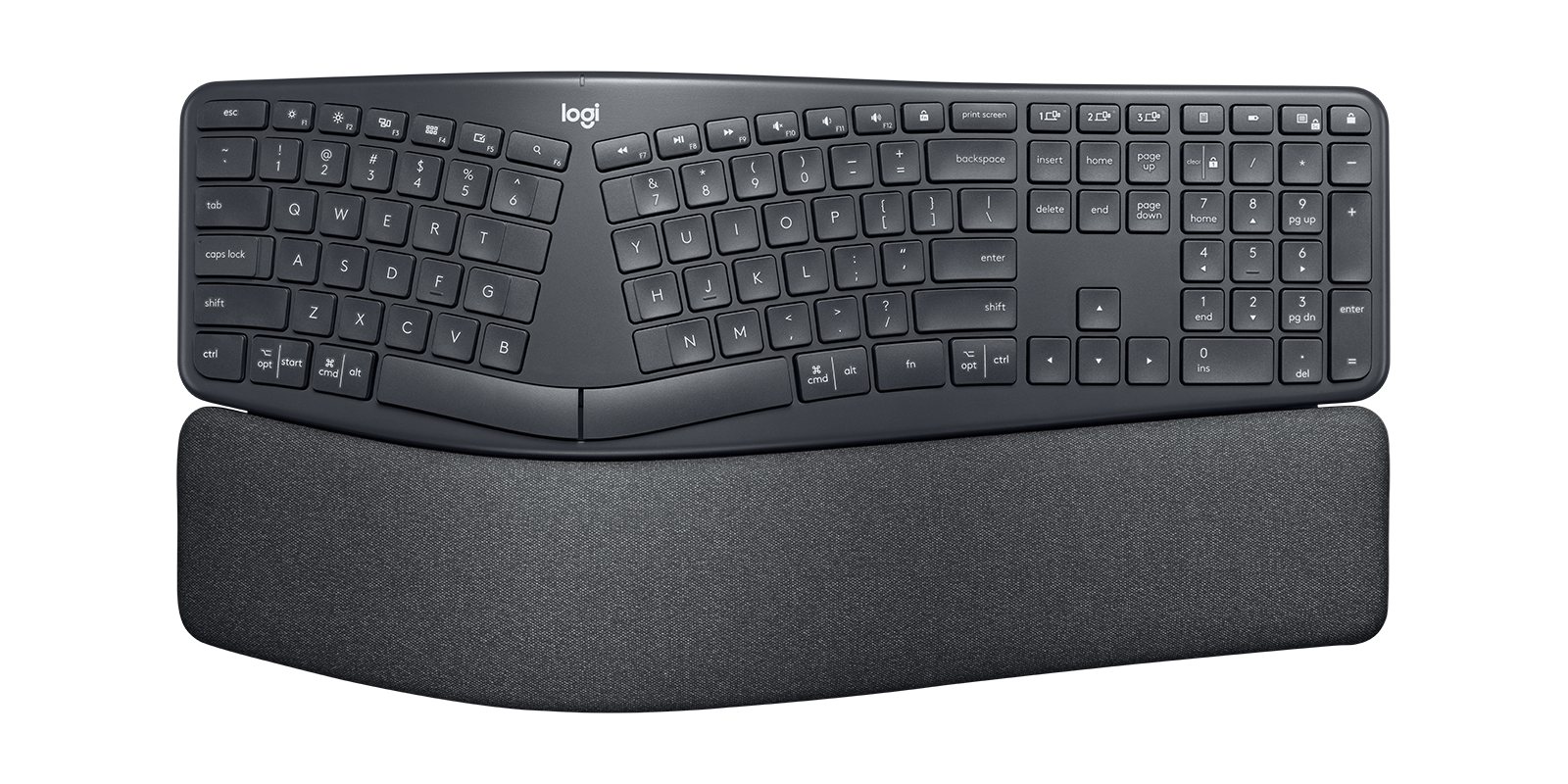
Logitech ERGO K860
A split, curved keyboard designed around natural wrist and forearm positioning, with a padded palm rest built in rather than sold separately. It’s aimed squarely at buyers dealing with, or trying to avoid, wrist strain from long typing sessions — not at typists chasing mechanical-switch feel.
- Split, curved layout with negative tilt is purpose-built to reduce wrist strain versus a flat keyboard
- Padded palm rest is integrated rather than a separate purchase
- Easy-Switch multi-device pairing carries over from Logitech’s MX ecosystem
- Scissor-switch keys prioritize ergonomics over the tactile feedback mechanical typists want
- Split layout has a real adjustment period for anyone used to a traditional keyboard shape
ERGO K860 ranks where it does because it’s solving a different problem than every board above it: wrist strain, not typing feel or customization. Its split, curved layout with a built-in palm rest is the clear pick for buyers dealing with discomfort on a flat keyboard, but the scissor-switch keys and single-purpose ergonomic focus keep it behind boards offering broader appeal.
The curved, split key layout and negative tilt are designed to keep wrists in a more neutral position than a flat keyboard allows, and the built-in cushioned palm rest removes the need to buy one separately. It shares Logitech’s Easy-Switch multi-device pairing and Logi Options+ customization with the MX line, but its scissor-switch keys prioritize ergonomics over typing feel.
- Buyers who place the highest priority on value for money
- Buyers who place the highest priority on build quality and durability
| Form Factor | full-size split ergonomic wireless |
|---|---|
| Configuration Note | Specifications vary by switch, color or layout where offered; exact configuration should be confirmed before purchase. |

Razer Pro Type Ultra
Razer’s productivity-focused board takes its low-profile mechanical switches out of the gaming lineup and drops the RGB in favor of a plush leatherette wrist rest and a quieter, office-appropriate design. It’s for buyers who want Razer’s switch feel without a gaming keyboard’s aesthetic or noise.
- Low-profile mechanical switches with a short, precise stroke and genuine tactile or clicky feedback
- Bundled plush leatherette wrist rest is a real comfort feature most competitors don’t include
- Long battery life and quiet, office-appropriate design without gaming RGB
- Costs more than similarly-equipped office keyboards without Razer’s mechanical-switch premium
- Lacks the low-latency 2.4GHz wireless mode Razer’s own gaming keyboards offer
Pro Type Ultra rounds out the list because its low-profile mechanical switches and bundled leatherette wrist rest genuinely differentiate it from ordinary office keyboards, but it costs more than similarly-equipped competitors and skips the low-latency 2.4GHz mode Razer’s own gaming boards offer, which is why it lands at the bottom of this particular ranking rather than mid-table.
The low-profile mechanical switches give a shorter, more precise stroke than full-height switches while still offering real tactile or clicky feedback, and the bundled leatherette wrist rest is a genuine comfort addition most competitors leave out. Multi-device Bluetooth pairing and a long battery life target all-day desk use rather than the low-latency wireless gaming boards Razer is better known for.
- Buyers who place the highest priority on value for money
- Buyers who place the highest priority on compatibility and software
| Form Factor | full-size mechanical wireless |
|---|---|
| Configuration Note | Specifications vary by switch, color or layout where offered; exact configuration should be confirmed before purchase. |
How We Evaluate Wireless Keyboards
Our rankings are built through the Flickthru CORE™ Market Research Engine, which first analyses the category, its intended buyers, and the current US market. Products are then assessed using category-specific evidence, performance indicators, availability, ownership signals, and long-term reliability considerations.
Recommendations reflect overall suitability for the intended buyer – not simply the highest specification, lowest price, or strongest result in a single test. When product-level customer feedback is limited, we prioritize official validation, credible technical evidence, and demonstrated category suitability rather than estimating or inflating review counts. Read the full Flickthru product ranking methodology.
- Category Specific Analysis: Defining buyers’ needs, primary uses, business priorities, acceptable compromises, and category-specific requirements before products are compared.
- Long-Term Reliability: Tracking recurring failure patterns, component durability, warranty trends, and long-term ownership outcomes from verified market data.
- Performance: Evaluating category-specific real-world performance, efficiency, consistency, and practical usability rather than relying on marketing claims alone.
- Features: Assessing functionality, usability, build quality, safety, ergonomics, and category-specific capabilities important to long-term ownership.
- Value: Measuring total cost of ownership, lifecycle longevity, support quality, lifecycle suitability, and overall return on investment.
- Evidence Review: Combining verified purchaser feedback where available with professional testing, official product validation, technical evidence, and market suitability signals.
- Market Coverage: Mapping the current US market, credible product families, availability, price positioning, and relevant competitors within the category.
Products demonstrating recurring reliability concerns, inconsistent performance behavior, poor ownership outcomes, or widespread negative sentiment are algorithmically suppressed from our rankings regardless of marketing claims, sponsorship relationships, or short-term popularity trends.
This methodology is designed to identify products that deliver genuine long-term value, reliability, and real-world usefulness rather than simply matching short-term hype, advertising claims, or isolated test results.