
Best Wifi 7 Routers 2026
A category-specific approach to ranking Wifi 7 Routers
Most general product roundups are built around broad buyer priorities. Flickthru evaluates wifi 7 routers for multi-gig fiber households, prioritising real world wireless performance, coverage and mesh scalability, multi gig wired connectivity, reliability and firmware support, and security and privacy.
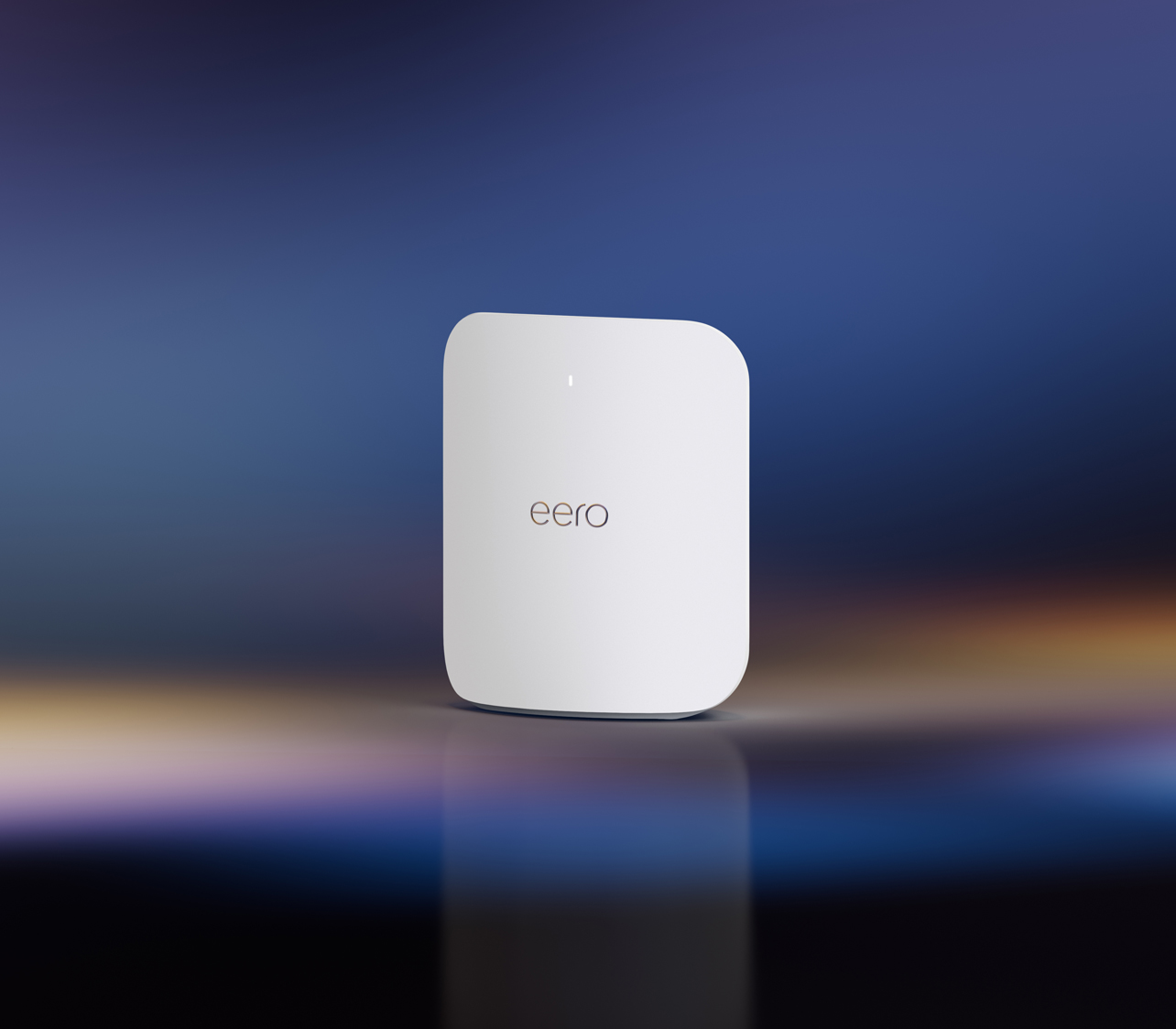
eero Max 7
The easiest premium Wi-Fi 7 mesh system, with superb performance but subscription-dependent extras.
- Excellent tested range and throughput
- Two 10GbE ports
- Very simple installation
- Strong Matter, Thread and Zigbee integration
- Premium price
- Useful security and parental features depend on eero Plus
- Limited advanced administration
Ties for the top CORE score at 89, led by a 95 in real-world wireless performance and a 94 in multi-gig wired connectivity — strong throughput paired with an easy setup (93) makes it the most well-rounded mesh system tested, though its 74 long-term-value score is the softest mark among the top three.
Independent testing confirms multi-gigabit close-range performance, unusually strong long-range throughput and broad real-home coverage.
Automatic updates simplify maintenance. Independent and owner evidence is broadly positive, though subscription dependence and occasional client-compatibility reports remain relevant.
- buyers avoiding subscriptions or needing deep browser-based controls
| Configuration | BE20800 tri-band mesh; two 10GbE ports; Thread/Zigbee smart-home support |
|---|---|
| Form Factor | mesh system |
| Wireless Standard | Wi-Fi 7 |
| Market | United States |
ASUS ZenWiFi BQ16 Pro
The fastest focused mesh contender, justified mainly for large homes with multi-gig service.
- Outstanding close-range throughput
- Quad-band design supports strong wireless backhaul
- Dual 10GbE ports per node
- Security tools do not require a subscription
- Very expensive
- Three LAN ports are only Gigabit
- Tiny owner sample reports mixed setup experiences
Also 89, driven by a 96 in both real-world wireless performance and coverage/mesh scalability, the best coverage mark in the entire lineup — the tri-band design covers large homes with ease, though a 63 long-term-value score is among the lowest in the guide.
Independent testing measured 2.62 Gbps at 15 feet and a useful range of 100 feet, with excellent peak speed and very good range; latency is better suited to general use than competitive gaming.
ASUS provides current firmware and support routes. The exact US Best Buy page has only three reviews, so its mixed setup signal is a caution, not a failure-rate estimate.
- small homes, modest broadband plans, or buyers sensitive to early-firmware complexity
| Configuration | BE30000 quad-band mesh; 10GbE; dedicated backhaul options; AiMesh |
|---|---|
| Form Factor | mesh system |
| Wireless Standard | Wi-Fi 7 |
| Market | United States |
ASUS ROG Rapture GT-BE98 Pro
A no-compromise gaming flagship whose capacity is exceptional but unnecessary for most homes.
- Class-leading Wi-Fi 7 performance
- Dual 10GbE and multiple 2.5GbE ports
- Quad-band AiMesh flexibility
- Extensive gaming and security controls
- Extremely expensive
- Large physical footprint
- Complex interface for casual users
Also 89, led by a 97 in both real-world wireless performance and multi-gig wired connectivity, the best wired mark of any router reviewed — flagship-grade throughput and port speed make it the performance leader, though its 59 long-term-value score is the lowest in the entire lineup.
Independent testing places it among the fastest Wi-Fi 7 routers, with strong range and unusually extensive wired connectivity.
ASUS maintains current firmware and support. The exact Best Buy aggregate is strong but includes tagged incentivized reviews, so themes are directional rather than a durability study.
- value buyers, compact spaces, or anyone who does not need quad-band hardware
| Configuration | BE30000 quad-band gaming router; dual 10GbE; four 2.5GbE; AiMesh |
|---|---|
| Form Factor | standalone router |
| Wireless Standard | Wi-Fi 7 |
| Market | United States |
ASUS RT-BE96U
A fast and configurable tri-band flagship with better value than the most extreme gaming models.
- Remarkable peak speeds
- Two configurable 10GbE ports
- Very good range
- Mature AiMesh and security controls
- Large chassis with eight antennas
- 5GHz performance falls at extreme range
- High price
Scores 88, anchored by a 95 in multi-gig wired connectivity and an 89 in both security/privacy and coverage/mesh scalability — a well-balanced profile across every category, with a 70 long-term-value score keeping it just behind the flagship tri-band systems above it.
Independent testing found exceptional top speeds and very good range, including strong 6GHz performance at close to 100 feet.
ASUS supplies active firmware and support routes. The exact owner aggregate is sizeable enough to surface recurring praise for speed and range alongside intermittent-connectivity concerns.
- small spaces or buyers needing a compact inexpensive router
| Configuration | BE19000 tri-band; dual 10GbE; AiMesh; AiProtection Pro |
|---|---|
| Form Factor | standalone router |
| Wireless Standard | Wi-Fi 7 |
| Market | United States |
ASUS ROG Strix GS-BE18000
An unusually strong speed-per-dollar gaming router with an excellent 2.5GbE port array.
- 2.354 Gbps measured at 15 feet
- Eight 2.5GbE ports
- Free AiProtection suite
- Passive cooling and straightforward setup
- No 10GbE port
- Gaming styling may not suit every room
- Some advanced settings add complexity
Also 88, led by a 95 in real-world wireless performance and a 93 in multi-gig wired connectivity — strong throughput for demanding networks stands out, though setup/management (81) and long-term value (75) are its more modest marks.
Independent testing measured 2.354 Gbps at 15 feet and showed strong performance across distance, with excellent speed and range for a standalone router.
Passive cooling removes fan noise, while ASUS provides current support. The 156-review Best Buy aggregate is positive on performance, connectivity and speed.
- buyers needing 10GbE routing or a discreet living-room design
| Configuration | BE18000 tri-band gaming router; dual 10GbE plus multi-gig Ethernet; AiMesh |
|---|---|
| Form Factor | standalone router |
| Wireless Standard | Wi-Fi 7 |
| Market | United States |

NETGEAR Orbi 970
An elite large-property mesh system whose technical ability is easier to defend than its price.
- Exceptional mesh coverage
- Multi-gig wireless backhaul
- 10GbE and 2.5GbE connectivity
- Straightforward app setup
- Extremely expensive
- Large nodes
- Security and parental extras require subscriptions
Also 88, with the guide’s best coverage/mesh-scalability score at 98 and matching 97s in wireless performance and wired connectivity — built for maximum whole-home coverage, though its 53 long-term-value score is the lowest of any router in this guide.
Independent testing measured roughly 2 Gbps at close range; two units provided stable coverage across a 1,600-square-foot home and garden under simultaneous use.
Firmware updates have improved early behavior, but both professional and owner evidence mention occasional device or connectivity issues. Those reports do not establish a population failure rate.
- most households, value buyers, or users avoiding subscription add-ons
| Configuration | BE27000 quad-band mesh; 10GbE and 2.5GbE; dedicated backhaul |
|---|---|
| Form Factor | mesh system |
| Wireless Standard | Wi-Fi 7 |
| Market | United States |

TP-Link Deco BE63
A well-balanced Wi-Fi 7 mesh choice with unusually flexible 2.5GbE connectivity.
- Strong mesh range and speed
- Four 2.5GbE ports per node
- Simple Deco app
- Flexible wired backhaul
- No 10GbE port
- HomeShield premium features cost extra
- Owner aggregate is modest
Scores 87, led by a 93 in setup/management and a 93 in coverage/mesh scalability — the easiest mesh system to set up and expand in the lineup, backed by an 85 long-term-value score, the best value mark of any router reviewed.
Independent testing indicates very strong speed and range for the evaluated configuration, supporting its position as a leading all-round mesh system.
TP-Link maintains current firmware and support. The 21-review exact two-pack aggregate is useful for setup and coverage themes but remains a limited sample.
- buyers needing advanced router controls or subscription-free premium security
| Configuration | BE10000 tri-band mesh; four 2.5GbE ports per node; MLO and wired backhaul |
|---|---|
| Form Factor | mesh system |
| Wireless Standard | Wi-Fi 7 |
| Market | United States |

TP-Link Archer GE800
A high-capacity gaming router that combines serious wired options with top-tier wireless performance.
- Leading tri-band throughput
- 10GbE, SFP+ and 2.5GbE flexibility
- Useful gaming dashboard
- Competitive flagship pricing
- Large aggressive design
- HomeShield extras may require payment
- Long Term Value scores 73/100, lower than this product’s other evaluated dimensions
Also 87, driven by a 95 in multi-gig wired connectivity and a 94 in real-world wireless performance — strong throughput and port speed make it a performance-first pick, though security/privacy (79) trails the ASUS and TP-Link mesh systems above it.
Independent testing found comparison-leading wireless performance, with capabilities well suited to multi-gig fiber connections and gaming-focused traffic control.
TP-Link supplies a current US support path and two-year warranty context. Eleven exact Best Buy reviews are positive overall but too few for strong reliability inference.
- buyers wanting a quiet understated or inexpensive router
| Configuration | BE19000 tri-band gaming router; dual 10GbE plus 2.5GbE; gaming controls |
|---|---|
| Form Factor | standalone router |
| Wireless Standard | Wi-Fi 7 |
| Market | United States |
ASUS RT-BE88U
The wired-network specialist of the group, trading 6GHz for unusually capable switching and administration.
- Exceptional wired port capacity
- Mature ASUS controls and AiMesh
- Strong dual-band performance
- Subscription-free security suite
- No 6GHz radio
- Single-review Best Buy sample is not representative
- Premium price for dual-band Wi-Fi
Also 87, evenly balanced with security/privacy (88) and reliability/firmware support (85) among its best marks — a dependable single-router option rather than a coverage specialist, backed by an 82 long-term-value score, one of the better value marks in the guide.
Independent testing found strong Wi-Fi 7-class throughput despite the dual-band design; its clearest advantage is high-capacity wired connectivity.
ASUS provides active firmware and support. The sole native Best Buy review is retained for completeness but carries minimal weight because of sample size and incentivized status.
- buyers specifically needing the 6GHz band
| Configuration | BE7200 dual-band; 10GbE plus 2.5GbE switching; AiMesh and AiProtection |
|---|---|
| Form Factor | standalone router |
| Wireless Standard | Wi-Fi 7 |
| Market | United States |

NETGEAR Nighthawk RS700S
A fast, compact standalone flagship with strong long-range ability but expensive service extras.
- Excellent peak speed and range
- 10GbE WAN and LAN
- Compact tower footprint
- Mature Nighthawk app
- High price
- Security extras are subscription-dependent
- Some setup complexity
Closes the group at 86, led by a 95 in multi-gig wired connectivity and a 94 in real-world wireless performance — strong throughput for a single-router setup is the calling card, though security/privacy (76) and long-term value (69) are its softer marks.
Independent testing found high Wi-Fi 7 throughput and broad range, with dual 10GbE ports preventing common wired bottlenecks.
NETGEAR provides current support and firmware routes. The 344-review exact Best Buy aggregate strongly favors performance and speed, with some setup difficulty noted.
- value buyers or households needing mesh coverage out of the box
| Configuration | BE19000 tri-band; 10GbE WAN/LAN; compact tower design |
|---|---|
| Form Factor | standalone router |
| Wireless Standard | Wi-Fi 7 |
| Market | United States |
How We Evaluate Wifi 7 Routers
Our rankings are built through the Flickthru CORE™ Market Research Engine, which first analyses the category, its intended buyers, and the current US market. Products are then assessed using category-specific evidence, performance indicators, availability, ownership signals, and long-term reliability considerations.
Recommendations reflect overall suitability for the intended buyer – not simply the highest specification, lowest price, or strongest result in a single test. When product-level customer feedback is limited, we prioritize official validation, credible technical evidence, and demonstrated category suitability rather than estimating or inflating review counts. Read the full Flickthru product ranking methodology.
- Category Specific Analysis: Defining buyers’ needs, primary uses, business priorities, acceptable compromises, and category-specific requirements before products are compared.
- Long-Term Reliability: Tracking recurring failure patterns, component durability, warranty trends, and long-term ownership outcomes from verified market data.
- Performance: Evaluating category-specific real-world performance, efficiency, consistency, and practical usability rather than relying on marketing claims alone.
- Features: Assessing functionality, usability, build quality, safety, ergonomics, and category-specific capabilities important to long-term ownership.
- Value: Measuring total cost of ownership, lifecycle longevity, support quality, lifecycle suitability, and overall return on investment.
- Evidence Review: Combining verified purchaser feedback where available with professional testing, official product validation, technical evidence, and market suitability signals.
- Market Coverage: Mapping the current US market, credible product families, availability, price positioning, and relevant competitors within the category.
Products demonstrating recurring reliability concerns, inconsistent performance behavior, poor ownership outcomes, or widespread negative sentiment are algorithmically suppressed from our rankings regardless of marketing claims, sponsorship relationships, or short-term popularity trends.
This methodology is designed to identify products that deliver genuine long-term value, reliability, and real-world usefulness rather than simply matching short-term hype, advertising claims, or isolated test results.