
Best Wifi 6 Routers 2026
A category-specific approach to ranking Wifi 6 Routers
Most general product roundups are built around broad buyer priorities. Flickthru evaluates wifi 6 routers for households replacing an ISP router, prioritising wireless performance, coverage and mesh scalability, reliability and device capacity, security and privacy, and setup and management.
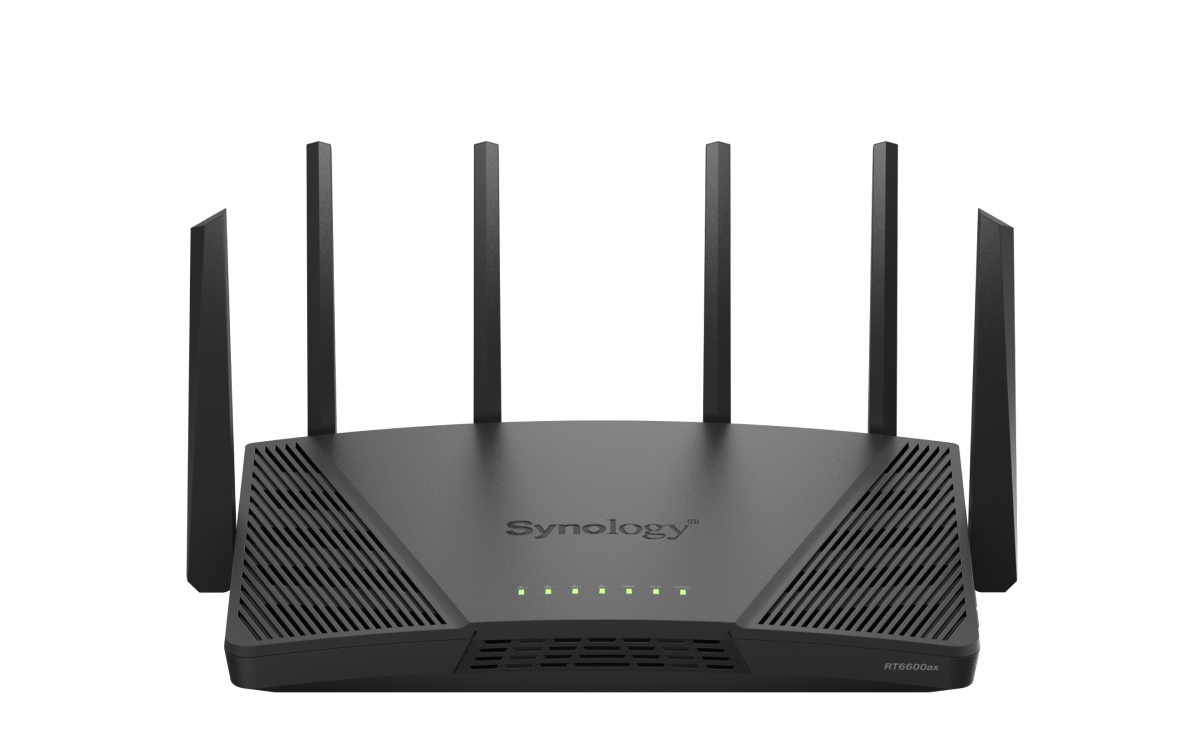
Synology RT6600ax
The most capable small-office management platform in this group, backed by tri-band Wi-Fi 6 and serious segmentation tools.
- Excellent SRM management and network segmentation
- Tri-band radios improve capacity and mesh backhaul options
- 2.5GbE and strong security features
- Security And Privacy scores 90/100 in this comparison, among the strongest dimensions evaluated
- High price for a Wi-Fi 6 router
- Large physical footprint
- Only one multi-gig port
Ties for the top CORE score at 87, led by a 90 in security/privacy and an 89 in wired connectivity/features — strong segmentation and administration controls make it the pick for small-business deployments, though setup/management (81) and long-term value (80) are its softer marks.
Excellent SRM management and network segmentation. Tri-band radios improve capacity and mesh backhaul options. High price for a Wi-Fi 6 router.
Synology RT6600ax has a current official firmware and support route. The retained reviews provide day-to-day use context, but no comparable multi-year field-failure dataset was found; confidence is therefore moderated without assuming poor reliability.
- Buyers wanting the simplest app-only setup
- Budget households with modest broadband speeds
| Wireless | Tri-band Wi-Fi 6, AX6600, 160MHz support |
|---|---|
| Ports | 1×2.5GbE WAN/LAN plus Gigabit WAN/LAN ports and USB 3.2 |
| Mesh | Synology Mesh with compatible routers |
| Security | WPA3, VLAN/SSID segmentation and Threat Prevention support |
| Management | Synology Router Manager web interface and DS router app |
ASUS RT-AX88U Pro
A premium dual-band Wi-Fi 6 router whose dual 2.5GbE ports and mature software justify it for demanding wired-and-wireless networks.
- Dual 2.5GbE ports avoid a common Wi-Fi 6 bottleneck
- Fast AX6000 radios with mature AiMesh
- Deep controls and included network protection
- Wired Connectivity And Features scores 91/100 in this comparison, among the strongest dimensions evaluated
- Premium price despite no 6GHz band
- Bulky antenna-heavy design
- Advanced interface can overwhelm casual users
Also 87, driven by an 89 in wireless performance and a 91 in wired connectivity/features, the best wired mark in the entire lineup — extensive settings and mesh-expansion support suit power users well, offset by a 80 long-term-value score.
Dual 2.5GbE ports avoid a common Wi-Fi 6 bottleneck. Fast AX6000 radios with mature AiMesh. Premium price despite no 6GHz band.
ASUS RT-AX88U Pro has a current official firmware and support route. The retained reviews provide day-to-day use context, but no comparable multi-year field-failure dataset was found; confidence is therefore moderated without assuming poor reliability.
- Minimalist households wanting plug-and-play administration
- Users investing primarily in 6GHz clients
| Wireless | Dual-band Wi-Fi 6, AX6000, 160MHz on 5GHz |
|---|---|
| Ports | 2×2.5GbE WAN/LAN, 4×Gigabit LAN and USB 3.2 |
| Mesh | ASUS AiMesh |
| Security | WPA3, AiProtection Pro and guest-network controls |
| Management | ASUS Router app and full browser interface |

GL.iNet Flint 2 (GL-MT6000)
The most flexible value choice for VPN and multi-gig users, provided its OpenWrt-oriented controls suit the buyer.
- Two 2.5GbE ports and four additional Gigabit ports
- Excellent VPN and policy-routing flexibility
- Strong tested speed and range for the price
- A practical port selection supports office accessories and external displays
- More technical than mainstream app-first routers
- Mesh experience is less polished than eero or Deco
- Open-source flexibility requires careful configuration
Also 87, powered by a 92 in wired connectivity/features and a 91 in wireless performance, both among the best in the group — strong multi-gig throughput and VPN capability stand out for technical users, though setup/management (77) is the lowest of any router reviewed.
Two 2.5GbE ports and four additional Gigabit ports. Excellent VPN and policy-routing flexibility. More technical than mainstream app-first routers.
GL.iNet Flint 2 (GL-MT6000) has a current official firmware and support route. The retained reviews provide day-to-day use context, but no comparable multi-year field-failure dataset was found; confidence is therefore moderated without assuming poor reliability.
- Anyone wanting a fully guided mesh setup
- Buyers uncomfortable managing advanced networking options
| Wireless | Dual-band Wi-Fi 6, AX6000, 160MHz support |
|---|---|
| Ports | 2×2.5GbE plus 4×Gigabit Ethernet and USB 3.0 |
| Mesh | Repeater and WDS modes; not a consumer mesh-first platform |
| Security | OpenWrt-based firewall, AdGuard Home and VPN policy controls |
| Management | GL.iNet web interface with advanced OpenWrt access |
ASUS ROG Rapture GT-AX6000
A powerful gaming-focused Wi-Fi 6 router with excellent wired headroom, though its size and specialist extras reduce mainstream value.
- Fast AX6000 radios and dual 2.5GbE
- Extensive gaming QoS and traffic tools
- AiMesh and included security suite
- Wired Connectivity And Features scores 91/100 in this comparison, among the strongest dimensions evaluated
- Large aggressive design
- High price for dual-band Wi-Fi 6
- Gaming options add interface complexity
Also 87, matching the leaders with a 92 in wired connectivity/features and a 91 in wireless performance — traffic-prioritization tools make it a strong fit for gaming households, though long-term value (77) is the lowest score in the top four.
Fast AX6000 radios and dual 2.5GbE. Extensive gaming QoS and traffic tools. Large aggressive design.
ASUS ROG Rapture GT-AX6000 has a current official firmware and support route. The retained reviews provide day-to-day use context, but no comparable multi-year field-failure dataset was found; confidence is therefore moderated without assuming poor reliability.
- Discreet living-room placement
- Buyers who only need basic sub-gigabit routing
| Wireless | Dual-band Wi-Fi 6, AX6000, 160MHz on 5GHz |
|---|---|
| Ports | 2×2.5GbE, 4×Gigabit LAN and two USB ports |
| Mesh | ASUS AiMesh |
| Security | WPA3 and AiProtection Pro |
| Management | ASUS Router app, browser UI and gaming QoS tools |
ASUS RT-AX86U Pro
A strong all-round Wi-Fi 6 router with excellent software depth, useful multi-gig connectivity and credible tested range.
- Strong speed and range for a standalone Wi-Fi 6 router
- 2.5GbE, USB and mature AiMesh expansion
- Subscription-free ASUS security and advanced controls
- Wireless Performance scores 90/100 in this comparison, among the strongest dimensions evaluated
- Only one 2.5GbE port
- Large upright chassis
- No 6GHz band for Wi-Fi 6E/7 clients
Scores 86, just behind the leaders on the strength of a 90 in wireless performance — strong controls without the security-focused premium of the Synology make it a solid all-rounder, with coverage/mesh scalability (84) as its most modest mark.
Strong speed and range for a standalone Wi-Fi 6 router. 2.5GbE, USB and mature AiMesh expansion. Only one 2.5GbE port.
ASUS RT-AX86U Pro has a current official firmware and support route. The retained reviews provide day-to-day use context, but no comparable multi-year field-failure dataset was found; confidence is therefore moderated without assuming poor reliability.
- Very large homes that need a multi-node kit out of the box
- Buyers needing several multi-gig wired ports
| Wireless | Dual-band Wi-Fi 6, AX5700, 160MHz on 5GHz |
|---|---|
| Ports | 1×2.5GbE WAN/LAN, 1×Gigabit WAN, 4×Gigabit LAN, USB 3.0 and USB 2.0 |
| Mesh | ASUS AiMesh |
| Security | WPA3 and AiProtection Pro |
| Management | ASUS Router app and browser interface |

TP-Link Archer AX73
A fast midrange router with strong 5GHz coverage, held back mainly by its all-Gigabit Ethernet design.
- Fast 5GHz Wi-Fi 6 performance
- Good coverage for a midrange standalone router
- USB and straightforward app/browser management
- Long Term Value scores 86/100 in this comparison, among the strongest dimensions evaluated
- Some HomeShield features require payment
- No dedicated wireless backhaul band
- Security And Privacy scores 76/100, lower than this product’s other evaluated dimensions
Scores 83, led by an 87 in wireless performance and an 86 in long-term value — broad standalone coverage suits households on gigabit-or-slower plans well, though security/privacy (76) is the lowest score of any router in the guide.
Fast 5GHz Wi-Fi 6 performance. Good coverage for a midrange standalone router. Some HomeShield features require payment.
TP-Link Archer AX73 has a current official firmware and support route. The retained reviews provide day-to-day use context, but no comparable multi-year field-failure dataset was found; confidence is therefore moderated without assuming poor reliability.
- Multi-gig internet subscribers
- Homes requiring guaranteed multi-node wireless backhaul
| Wireless | Dual-band Wi-Fi 6, AX5400, 160MHz support |
|---|---|
| Ports | 1×Gigabit WAN, 4×Gigabit LAN and USB 3.0 |
| Mesh | OneMesh and compatible EasyMesh support by firmware/region |
| Security | WPA3 and HomeShield free/paid tiers |
| Management | TP-Link Tether app and browser interface |
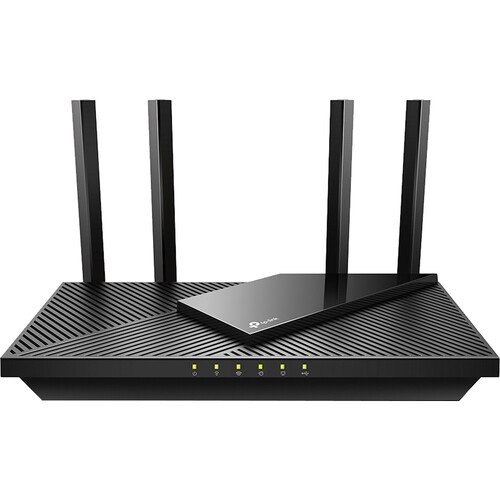
TP-Link Archer AX55
The clearest mainstream value pick, with unusually strong measured speed and range for a budget AX3000 router.
- Excellent tested performance for the price
- Useful 160MHz support, USB and mesh compatibility
- Both app and browser setup options
- Long Term Value scores 86/100 in this comparison, among the strongest dimensions evaluated
- No multi-gig Ethernet
- Paid tier for advanced HomeShield functions
- Single router can still leave dead zones in difficult large homes
Also 83, its 91 in long-term value is the best in the entire lineup — the strongest performance-per-dollar here comes with trade-offs in wired connectivity/features (77) and security/privacy (77), both below the group average.
Excellent tested performance for the price. Useful 160MHz support, USB and mesh compatibility. No multi-gig Ethernet.
TP-Link Archer AX55 has a current official firmware and support route. The retained reviews provide day-to-day use context, but no comparable multi-year field-failure dataset was found; confidence is therefore moderated without assuming poor reliability.
- Internet plans above one gigabit
- Buyers needing enterprise-style segmentation
| Wireless | Dual-band Wi-Fi 6, AX3000, 160MHz support |
|---|---|
| Ports | 1×Gigabit WAN, 4×Gigabit LAN and USB 3.0 |
| Mesh | EasyMesh and OneMesh compatibility |
| Security | WPA3 and HomeShield free/paid tiers |
| Management | TP-Link Tether app and browser interface |

TP-Link Deco X55
A strong-value whole-home mesh system that trades advanced control and multi-gig ports for simplicity and coverage.
- Broad whole-home coverage with easy expansion
- Three Ethernet ports per node and wired backhaul
- Simple Deco app and competitive multi-node pricing
- A practical port selection supports office accessories and external displays
- Dual-band wireless backhaul reduces peak satellite speed
- Gigabit-only Ethernet
- Advanced controls are limited and some HomeShield tools cost extra
Also 83, led by a 90 in coverage/mesh scalability and an 89 in setup/management — strong multi-node throughput and easy setup are the mesh system’s calling cards, offset by the lowest wired connectivity/features score in the guide at 72.
Exact-system review evaluates multi-node throughput, coverage, setup and Ethernet-backhaul value. Independent review assesses the Deco X55 mesh experience, coverage, app and feature limitations. The assessment separates measured claims from official maximum rates and does not treat roundup placement as performance proof.
TP-Link Deco X55 has a current official firmware and support route. The retained reviews provide day-to-day use context, but no comparable multi-year field-failure dataset was found; confidence is therefore moderated without assuming poor reliability.
- Power users wanting a full browser interface
- Multi-gig internet plans
| Wireless | Dual-band Wi-Fi 6 mesh, AX3000, 160MHz support |
|---|---|
| Ports | 3×Gigabit auto-sensing Ethernet per node |
| Mesh | Deco seamless mesh with wired backhaul support |
| Security | WPA3 and HomeShield free/paid tiers |
| Management | TP-Link Deco mobile app |

eero 6+
The easiest mesh system to live with, but its minimal wired connectivity and subscription-gated extras limit technical value.
- Exceptionally easy setup and expansion
- Compact nodes with stable automatic mesh management
- 160MHz support improves speed over the original eero 6
- A practical port selection supports office accessories and external displays
- Only two Gigabit ports per node
- Advanced security and parental tools require eero Plus
- App-only administration offers limited tuning
Scores 82, anchored by a 91 in setup and management, the best mark of any product reviewed — the simplest, most reliable expandable mesh experience in the lineup, though wired connectivity/features (67) is the weakest score across the whole guide.
Exceptionally easy setup and expansion. Compact nodes with stable automatic mesh management. Only two Gigabit ports per node.
eero 6+ has a current official firmware and support route. The retained reviews provide day-to-day use context, but no comparable multi-year field-failure dataset was found; confidence is therefore moderated without assuming poor reliability.
- Power users needing VLANs or detailed radio settings
- Multi-gig wired networks
| Wireless | Dual-band Wi-Fi 6 mesh, AX3000-class with 160MHz support |
|---|---|
| Ports | 2×auto-sensing Gigabit Ethernet per node |
| Mesh | eero TrueMesh with compatible eero devices |
| Security | WPA3; advanced security and controls through eero Plus |
| Management | eero mobile app only |

Acer Predator Connect W6x
A credible affordable gaming router with valuable included controls, though its range and ecosystem trail the leaders.
- 2.5GbE WAN and useful Hybrid QoS
- Included Trend Micro security and parental controls
- Competitive price for a gaming-focused router
- Long Term Value scores 86/100 in this comparison, among the strongest dimensions evaluated
- Longer-range speed falls noticeably
- Gigabit-only LAN ports
- Less mature ecosystem than ASUS or TP-Link
Closes the group at 81, evenly spread across categories with an 83 in wireless performance and long-term value alike — 2.5GbE WAN, QoS and included security suit budget-conscious gamers, without any single standout or weak category among its scores.
2.5GbE WAN and useful Hybrid QoS. Included Trend Micro security and parental controls. Longer-range speed falls noticeably.
Acer Predator Connect W6x has a current official firmware and support route. The retained reviews provide day-to-day use context, but no comparable multi-year field-failure dataset was found; confidence is therefore moderated without assuming poor reliability.
- Large homes needing strong far-room throughput
- Buyers seeking a mature mesh ecosystem
| Wireless | Dual-band Wi-Fi 6 gaming router |
|---|---|
| Ports | 1×2.5GbE WAN, 4×Gigabit LAN and USB 3.2 |
| Mesh | Not positioned as a mesh-first system |
| Security | Trend Micro network security and parental controls |
| Management | Predator Connect app/browser tools with Hybrid QoS |
How We Evaluate Wifi 6 Routers
Our rankings are built through the Flickthru CORE™ Market Research Engine, which first analyses the category, its intended buyers, and the current US market. Products are then assessed using category-specific evidence, performance indicators, availability, ownership signals, and long-term reliability considerations.
Recommendations reflect overall suitability for the intended buyer – not simply the highest specification, lowest price, or strongest result in a single test. When product-level customer feedback is limited, we prioritize official validation, credible technical evidence, and demonstrated category suitability rather than estimating or inflating review counts. Read the full Flickthru product ranking methodology.
- Category Specific Analysis: Defining buyers’ needs, primary uses, business priorities, acceptable compromises, and category-specific requirements before products are compared.
- Long-Term Reliability: Tracking recurring failure patterns, component durability, warranty trends, and long-term ownership outcomes from verified market data.
- Performance: Evaluating category-specific real-world performance, efficiency, consistency, and practical usability rather than relying on marketing claims alone.
- Features: Assessing functionality, usability, build quality, safety, ergonomics, and category-specific capabilities important to long-term ownership.
- Value: Measuring total cost of ownership, lifecycle longevity, support quality, lifecycle suitability, and overall return on investment.
- Evidence Review: Combining verified purchaser feedback where available with professional testing, official product validation, technical evidence, and market suitability signals.
- Market Coverage: Mapping the current US market, credible product families, availability, price positioning, and relevant competitors within the category.
Products demonstrating recurring reliability concerns, inconsistent performance behavior, poor ownership outcomes, or widespread negative sentiment are algorithmically suppressed from our rankings regardless of marketing claims, sponsorship relationships, or short-term popularity trends.
This methodology is designed to identify products that deliver genuine long-term value, reliability, and real-world usefulness rather than simply matching short-term hype, advertising claims, or isolated test results.