
Best USB Microphones 2026
A category-specific approach to ranking USB Microphones
Most general product roundups are built around broad buyer priorities. Flickthru evaluates usb microphones for podcasters and video creators recording spoken voice, prioritising voice capture quality, room noise rejection, setup usability, monitoring controls, and software processing.
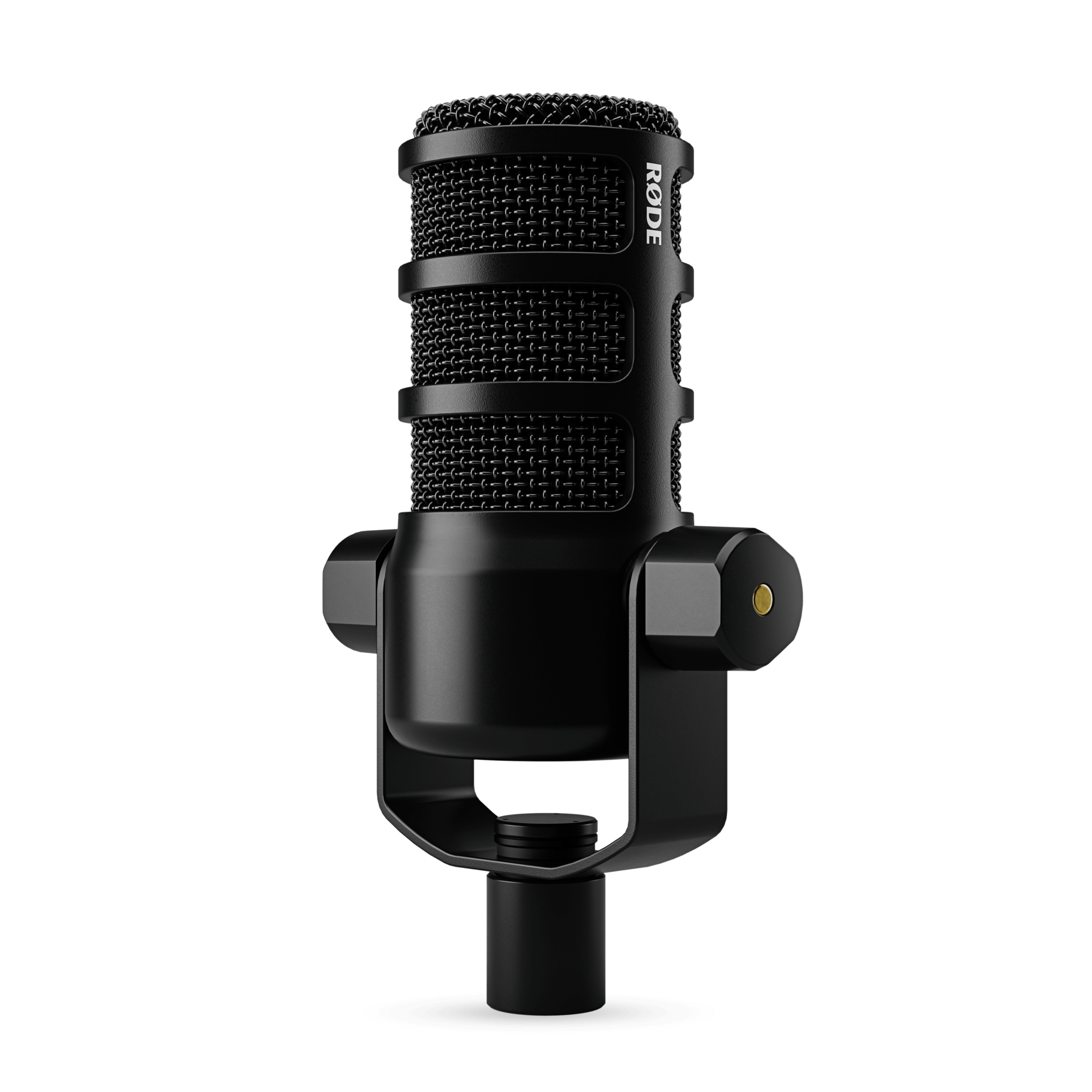
RØDE PodMic USB
A rugged, room-forgiving podcast mic with excellent USB/XLR flexibility, provided it is mounted and gain-staged properly.
- Broadcast-style close voice
- USB-C and XLR
- Onboard APHEX processing
- Scores 96/100 on connectivity workflow flexibility, among the strongest dimensions evaluated for this product
- Heavy enough to demand a sturdy mount
- Can transmit desk vibration
- Excess gain or processing can expose hiss
The PodMic USB takes first place by combining broadcast-style voice capture, excellent rejection of untreated-room noise, onboard APHEX processing and a genuine USB-to-XLR upgrade path at a competitive price. The MV7+ is more polished in software, but the PodMic covers more podcast and streaming setups for the money, provided it is paired with a sturdy mount.
Close-address tests consistently describe warm, stable speech and useful rejection. The DSP can deliver a finished tone, but sensible gain and a solid arm matter more than aggressive processing.
RØDE PodMic USB is a strong buyers prioritising connectivity workflow flexibility choice for podcast desks and untreated rooms, combining scores 96/100 on connectivity workflow flexibility, among the strongest dimensions evaluated for this product with scores 94/100 on room noise rejection, among the strongest dimensions evaluated for this product.
- Distant desktop placement
- Lightweight travel kits
| Summary | Dynamic cardioid; USB-C and XLR; headphone monitoring; internal DSP |
|---|
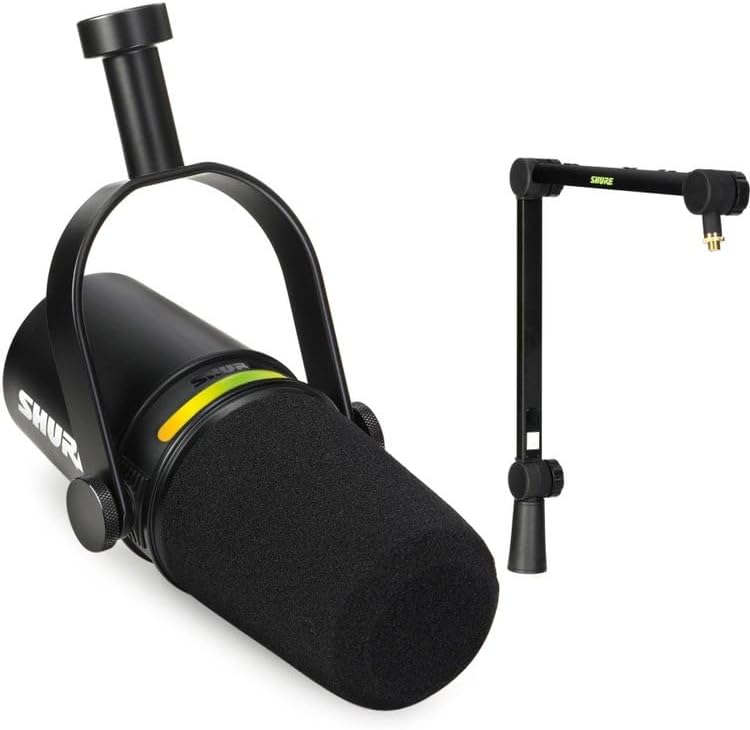
Shure MV7+
The most balanced premium choice: strong room control, polished USB processing and a genuine XLR upgrade path.
- Warm, controlled speech in ordinary rooms
- USB-C and XLR with direct monitoring
- MOTIV processing reduces setup work
- Scores 96/100 on connectivity workflow flexibility, among the strongest dimensions evaluated for this product
- Premium price
- A proper arm improves positioning
- Single cardioid pattern
The MV7+ earns second place as the most complete premium option for creators who want warm, controlled speech with minimal setup. Its Auto Level, denoising, plosive control, direct monitoring and USB/XLR connectivity make it more capable than the MV6, while the PodMic USB retains the overall lead through stronger value and similarly effective room control.
The dynamic cardioid capsule rewards close placement with dense, intelligible speech and less room sound than condenser rivals. Auto Level, denoising and plosive control are useful rather than decorative, while XLR keeps the mic relevant if the setup grows.
Shure MV7+ is a strong buyers prioritising connectivity workflow flexibility choice for podcasters who want polished voice and an XLR upgrade path, combining scores 96/100 on connectivity workflow flexibility, among the strongest dimensions evaluated for this product with scores 94/100 on monitoring controls, among the strongest dimensions evaluated for this product.
- Round-table recording
- Buyers who only need basic calls
| Summary | Dynamic cardioid; USB-C and XLR; 3.5 mm monitoring; 24-bit/48 kHz |
|---|

Shure MV6
The easiest route to Shure-style speech clarity for buyers who do not need XLR.
- Clear voice with excellent rear rejection
- Very simple USB setup
- Effective auto-level and denoising
- Scores 94/100 on room noise rejection, among the strongest dimensions evaluated for this product
- USB only
- Limited onboard controls
- Short included cable
The MV6 ranks third because it delivers the clearest plug-and-play route to focused speech in an untreated room. Effective Auto Level, denoising and rear rejection make it especially strong for calls, gaming and first-time streaming; the MV7+ ranks higher for its XLR expansion and fuller controls, while the MV6 beats the condenser alternatives on simplicity and room control.
Independent tests agree that the MV6 produces crisp speech with unusually little setup. Auto Level tolerates movement well, though maximum noise reduction can sound watery and the lack of physical gain feedback limits manual control.
Shure MV6 is a strong buyers prioritising room noise rejection choice for gamers, remote workers and new streamers, combining scores 94/100 on room noise rejection, among the strongest dimensions evaluated for this product with scores 93/100 on setup usability, among the strongest dimensions evaluated for this product.
- Users planning an XLR chain
- Hands-on hardware mixers
| Summary | Dynamic cardioid; USB-C; 3.5 mm monitoring; voice-isolation DSP |
|---|

Elgato Wave:3 MK.2
The strongest software-first streaming mic, with a genuinely improved MK.2 capsule and onboard processing rather than a cosmetic refresh.
- Natural, full voice with tighter supercardioid focus
- Five onboard DSP effects
- Excellent Wave Link routing
- Scores 97/100 on software processing, among the strongest dimensions evaluated for this product
- Sensitive mute control
- Voice Focus can trim quick speech
- No XLR
The Wave:3 MK.2 takes fourth place as the strongest software-first streaming microphone. Its warmer revised capsule, five onboard effects, Clipguard and Wave Link routing create a more complete broadcast workflow than the conventional USB condensers below it, while the three dynamic leaders remain better suited to noisy or untreated rooms.
Elgato Wave:3 MK.2 is a strong buyers prioritising software processing choice for streamers who want software mixing and easy processing, combining scores 97/100 on software processing, among the strongest dimensions evaluated for this product with scores 93/100 on setup usability, among the strongest dimensions evaluated for this product.
Elgato Wave:3 MK.2 is a strong buyers prioritising software processing choice for streamers who want software mixing and easy processing, combining scores 97/100 on software processing, among the strongest dimensions evaluated for this product with scores 93/100 on setup usability, among the strongest dimensions evaluated for this product.
- Software-averse users
- Round-table recording
| Summary | Cardioid condenser; USB-C; 24-bit/96 kHz; Wave Link routing and WaveFX DSP |
|---|

RØDE NT-USB+
The best voice-and-music condenser here, delivering clean conversion and practical DSP in a simple USB workflow.
- Detailed vocals and instruments
- Useful onboard APHEX DSP
- Direct monitor mix control
- Scores 93/100 on voice capture quality, among the strongest dimensions evaluated for this product
- Cardioid only
- Condenser picks up room and desk noise
- Possible headphone hiss under some USB conditions
The NT-USB+ ranks fifth as the best conventional USB condenser for creators recording both voice and instruments. Clean conversion, low self-noise, direct monitor mixing and savable APHEX processing give it broader studio value than most USB-only rivals; the Wave:3 MK.2 offers the stronger streaming ecosystem, while the NT-USB+ is the more natural fit for solo music and voice production.
RØDE NT-USB+ is a strong buyers prioritising voice capture quality choice for voiceover, vocals and acoustic instruments in quiet rooms, combining scores 93/100 on voice capture quality, among the strongest dimensions evaluated for this product with scores 91/100 on monitoring controls, among the strongest dimensions evaluated for this product.
RØDE NT-USB+ is a strong buyers prioritising voice capture quality choice for voiceover, vocals and acoustic instruments in quiet rooms, combining scores 93/100 on voice capture quality, among the strongest dimensions evaluated for this product with scores 91/100 on monitoring controls, among the strongest dimensions evaluated for this product.
- Noisy untreated desks
- Multi-person interviews
| Summary | Cardioid condenser; USB-C; 24-bit/48 kHz; headphone monitoring; APHEX processing |
|---|

Shure MV7i
A unique microphone-interface hybrid that can simplify two-channel recording, but its value depends on actually using the second input.
- Integrated second XLR/quarter-inch input
- Two-channel recording in one device
- Strong Shure DSP and monitoring
- Scores 100/100 on connectivity workflow flexibility, among the strongest dimensions evaluated for this product
- Highest price in the set
- Overkill for one-person USB use
- Requires a stand and software registration
The MV7i earns sixth place by doing something none of the other finalists can: combining a polished Shure vocal microphone with a second XLR/quarter-inch input for two-channel recording. That integrated interface makes it the standout choice for two-person podcasts, interviews and singer-creators, while its specialist design and premium price keep the more broadly useful NT-USB+ ahead overall.
Shure MV7i is a strong buyers prioritising connectivity workflow flexibility choice for two-person podcasts and singer-creators wanting one compact interface, combining scores 100/100 on connectivity workflow flexibility, among the strongest dimensions evaluated for this product with scores 93/100 on software processing, among the strongest dimensions evaluated for this product.
Shure MV7i is a strong buyers prioritising connectivity workflow flexibility choice for two-person podcasts and singer-creators wanting one compact interface, combining scores 100/100 on connectivity workflow flexibility, among the strongest dimensions evaluated for this product with scores 93/100 on software processing, among the strongest dimensions evaluated for this product.
- Single-speaker calls
- Budget streamers
| Summary | Dynamic cardioid USB-C microphone with integrated second XLR/quarter-inch input; 24-bit/48 kHz |
|---|

Maono PD200W
Unmatched connection flexibility for the money, with good voice quality rather than category-leading refinement.
- USB, XLR and 2.4 GHz wireless
- Long rated battery life
- Strong bundle value
- Scores 99/100 on connectivity workflow flexibility, among the strongest dimensions evaluated for this product
- Less vocal clarity than premium dynamics
- Audible mute button
- Bulky receiver and modest control feel
The PD200W takes seventh place as the connectivity and value specialist, offering USB, XLR and 2.4 GHz wireless operation in one affordable package. Its warm dynamic capsule and strong room rejection make it more adaptable than the QuadCast 2 S for mobile and untreated-room use, while the MV7i remains ahead for vocal refinement, control quality and two-channel production.
USB, XLR and wireless tests all produced usable, warm speech, and the 60-hour rated battery survived a three-day review with charge remaining. The large dynamic capsule rejects room sound well, but fine detail and control feel trail the leaders.
The metal body and included shock mount are positives, while wireless electronics add complexity. Three owner routes produced no safe numeric exact-product aggregate, so reliability confidence remains deliberately neutral.
- Buyers prioritizing maximum vocal refinement
- Minimalist fixed desks
| Summary | Dynamic cardioid; USB-C, XLR and 2.4 GHz wireless; headphone monitoring |
|---|
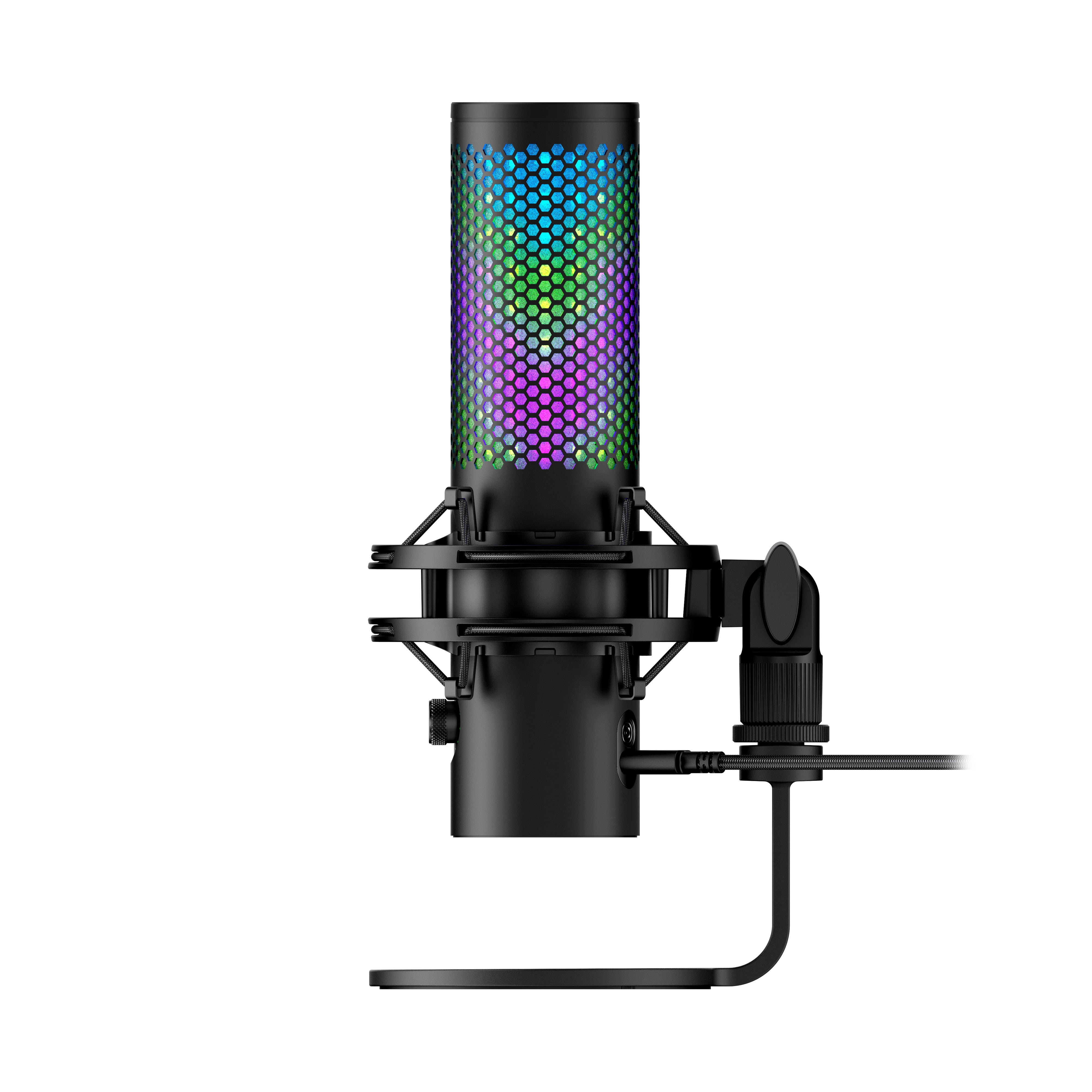
HyperX QuadCast 2 S
The best all-in-one multi-pattern gaming mic, though buyers paying only for sound can spend less.
- Four pickup patterns
- Excellent controls and mute feedback
- 32-bit/192 kHz capture
- Scores 95/100 on monitoring controls, among the strongest dimensions evaluated for this product
- Large and visually prominent
- RGB adds cost
- Condenser sensitivity reveals room noise
The QuadCast 2 S ranks eighth as the most complete gaming-desk microphone, pairing four pickup patterns with excellent physical controls, unmistakable mute feedback and high-resolution capture. It offers more streaming and multi-person flexibility than the single-pattern Profile USB, while the PD200W ranks higher through stronger room rejection and its wider USB, XLR and wireless connectivity.
Tests praise the multifunction dial, pattern switching and improved high-resolution capture. It is versatile and forgiving against clipping, but its condenser array remains more room-sensitive than close dynamic alternatives.
HyperX QuadCast 2 S is a strong buyers prioritising monitoring controls choice for gaming streams and multi-pattern desks, combining scores 95/100 on monitoring controls, among the strongest dimensions evaluated for this product with scores 92/100 on setup usability, among the strongest dimensions evaluated for this product.
- Untreated rooms where rejection is paramount
- Buyers indifferent to lighting
| Summary | Three-capsule condenser; four patterns; USB-C; 32-bit/192 kHz; headphone monitoring |
|---|

Sennheiser Profile USB
A refreshingly direct USB mic with excellent controls and natural sound, especially for buyers who dislike companion apps.
- Natural voice and instrument capture
- Best-in-class physical monitoring controls
- Fast driverless setup
- Scores 94/100 on monitoring controls, among the strongest dimensions evaluated for this product
- No software processing
- Single cardioid pattern
- No pop filter and some monitor hiss
The Profile USB earns ninth place by delivering natural, warm capture through a refreshingly direct, software-free workflow. Its metal construction, excellent gain and monitor-mix controls, and effortless driverless setup make it the better pure recording tool than the NZXT, while the QuadCast 2 S ranks higher for its multiple patterns and broader streaming versatility.
Week-long and month-long tests found clear, warm, undistorted capture and excellent gain/mix controls. Output is quieter than some rivals and pushing gain can reveal room noise; a pop filter is a sensible addition.
The metal build and simple software-free design reduce complexity. No safe numeric owner aggregate survived three routes, so long-term confidence rests on product construction and support rather than owner counts.
- Heavy software routing
- Multi-pattern interviews
| Summary | Cardioid condenser; USB-C; 24-bit/48 kHz; headphone monitoring and mix control |
|---|

NZXT Capsule Elite
The value standout: genuinely strong voice quality and useful processing at a price that leaves room for an arm.
- Rich speech for a low price
- Useful de-popper, de-esser and EQ
- Compact orientation options
- Scores 94/100 on value support, among the strongest dimensions evaluated for this product
- Plastic feel
- Stand assembly is fiddly
- Software favors Windows
The Capsule Elite completes the top ten as the strongest entry-level value choice. Its warm speech capture, de-popper, de-esser and EQ deliver a substantial upgrade over headset or webcam audio while leaving budget for a boom arm; the Profile USB ranks higher for its metal build and superior physical controls, but the NZXT offers the more accessible starting point.
Daily-use and comparison testing found warm, clear speech and a major improvement over headset/webcam mics. Noise suppression is less convincing than de-popping and EQ, while the stand and lightweight shell reveal the low price.
The two-year warranty route is documented and the exact hardware family has an owner aggregate, but only six reviews were available; no broad reliability conclusion is justified.
- Mac-centric software workflows
- Users demanding premium construction
| Summary | Cardioid condenser; USB-C; 24-bit/192 kHz; headphone monitoring; CAM processing |
|---|
How We Evaluate USB Microphones
Our rankings are built through the Flickthru CORE™ Market Research Engine, which first analyses the category, its intended buyers, and the current US market. Products are then assessed using category-specific evidence, performance indicators, availability, ownership signals, and long-term reliability considerations.
Recommendations reflect overall suitability for the intended buyer – not simply the highest specification, lowest price, or strongest result in a single test. When product-level customer feedback is limited, we prioritize official validation, credible technical evidence, and demonstrated category suitability rather than estimating or inflating review counts. Read the full Flickthru product ranking methodology.
- Category Specific Analysis: Defining buyers’ needs, primary uses, business priorities, acceptable compromises, and category-specific requirements before products are compared.
- Long-Term Reliability: Tracking recurring failure patterns, component durability, warranty trends, and long-term ownership outcomes from verified market data.
- Performance: Evaluating category-specific real-world performance, efficiency, consistency, and practical usability rather than relying on marketing claims alone.
- Features: Assessing functionality, usability, build quality, safety, ergonomics, and category-specific capabilities important to long-term ownership.
- Value: Measuring total cost of ownership, lifecycle longevity, support quality, lifecycle suitability, and overall return on investment.
- Evidence Review: Combining verified purchaser feedback where available with professional testing, official product validation, technical evidence, and market suitability signals.
- Market Coverage: Mapping the current US market, credible product families, availability, price positioning, and relevant competitors within the category.
Products demonstrating recurring reliability concerns, inconsistent performance behavior, poor ownership outcomes, or widespread negative sentiment are algorithmically suppressed from our rankings regardless of marketing claims, sponsorship relationships, or short-term popularity trends.
This methodology is designed to identify products that deliver genuine long-term value, reliability, and real-world usefulness rather than simply matching short-term hype, advertising claims, or isolated test results.