
Best Wifi Mesh Systems 2026
A category-specific approach to ranking Wifi Mesh Systems
Most general product roundups are built around broad buyer priorities. Flickthru evaluates wifi mesh systems for US households, small businesses and small offices choosing a whole-home Wi‑Fi mesh system. Rank products by real-world coverage and speed, connection stability, seamless roaming, wired backhaul and multi-gig support, setup and management, security, device capacity, subscription costs, and overall value. Identify the best options for large homes, gigabit internet, smart homes, and budget buyers, prioritising coverage backhaul performance, real world throughput, reliability and roaming, wired connectivity and multigig, and setup and management.
Asus ZenWiFi BQ16 Pro
The performance leader when range, backhaul capacity and 10GbE matter more than price.
- Exceptional tested speed
- Quad-band wireless backhaul headroom
- Subscription-free security suite
- Real World Throughput scores 94/100 in this comparison, among the strongest dimensions evaluated
- Expensive
- Most clients cannot exploit its full ceiling
- Three LAN ports are only Gigabit
It takes first place by leading the field in real-world throughput while also scoring at the top for coverage, backhaul and multi-gig connectivity. Quad-band capacity and subscription-free security make it unusually complete for demanding large homes. Its weak value score keeps the recommendation focused on buyers who will actually use that performance.
Two-pack lab review found excellent peak speed, very good range and unusually consistent satellite latency; detailed numeric tables were paywalled. Current test program measured 2.620 Gbps at 15 feet and useful service at 100 feet for the BQ16 Pro.
Current test program measured 2.620 Gbps at 15 feet and useful service at 100 feet for the BQ16 Pro. Long-term failure-rate evidence is not established, so no owner aggregate is converted into a reliability rate.
- Smaller homes or value-first buyers
| Model | Asus ZenWiFi BQ16 Pro |
|---|
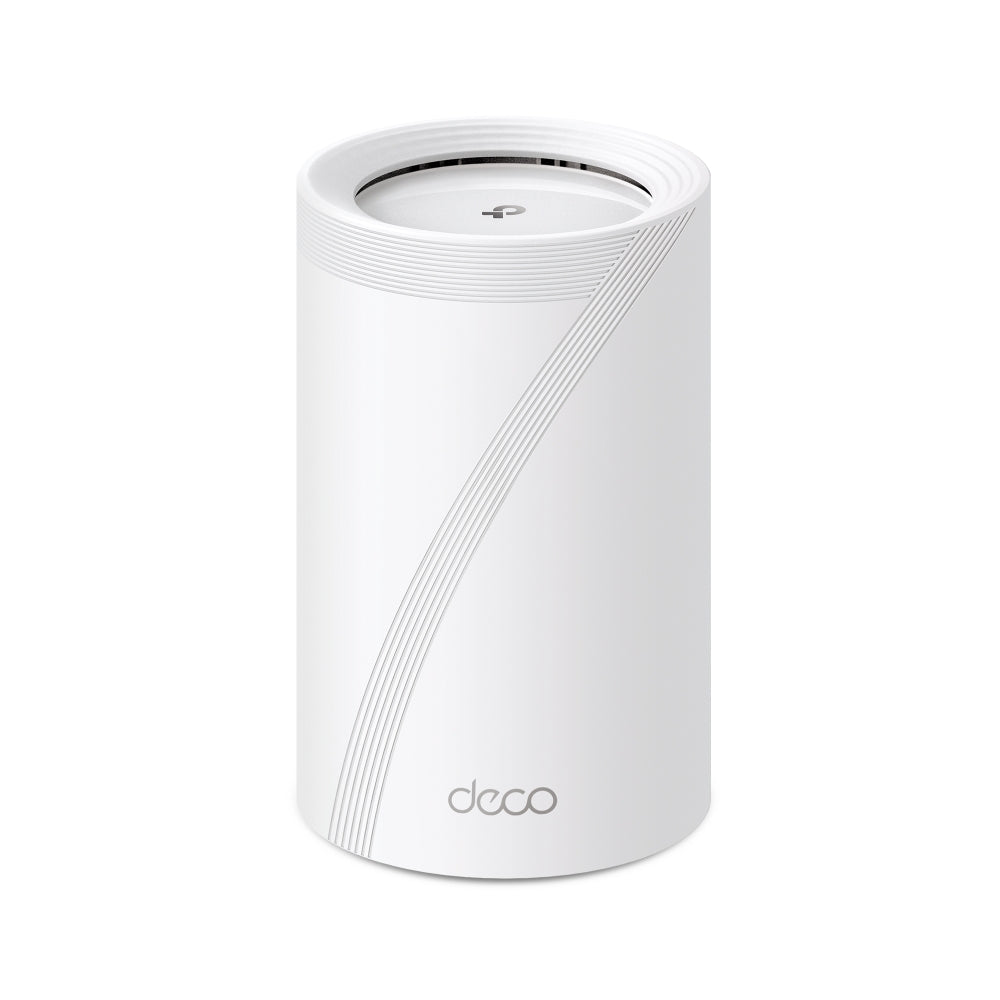
TP-Link Deco BE63
The most balanced mainstream Wi-Fi 7 mesh in this field.
- Fast Wi-Fi 7 performance
- Four 2.5GbE ports per node
- Strong price-to-capability balance
- Coverage Backhaul Performance scores 90/100 in this comparison, among the strongest dimensions evaluated
- Satellite latency is not ideal for competitive gaming
- Advanced security features can require a subscription
- App-first controls are less granular
Second place reflects the strongest balance of performance and price rather than dominance in one niche. Fast Wi-Fi 7 coverage, four 2.5GbE ports per node and an 85 value score put it within two points of the winner at a more accessible cost. It misses the top spot because its management, subscription model and satellite latency are less convincing.
Fast Wi-Fi 7 performance. Four 2.5GbE ports per node. Satellite latency is not ideal for competitive gaming.
Fast Wi-Fi 7 performance. Four 2.5GbE ports per node. Satellite latency is not ideal for competitive gaming.
- Power users wanting deep web administration
| Model | TP-Link Deco BE63 |
|---|
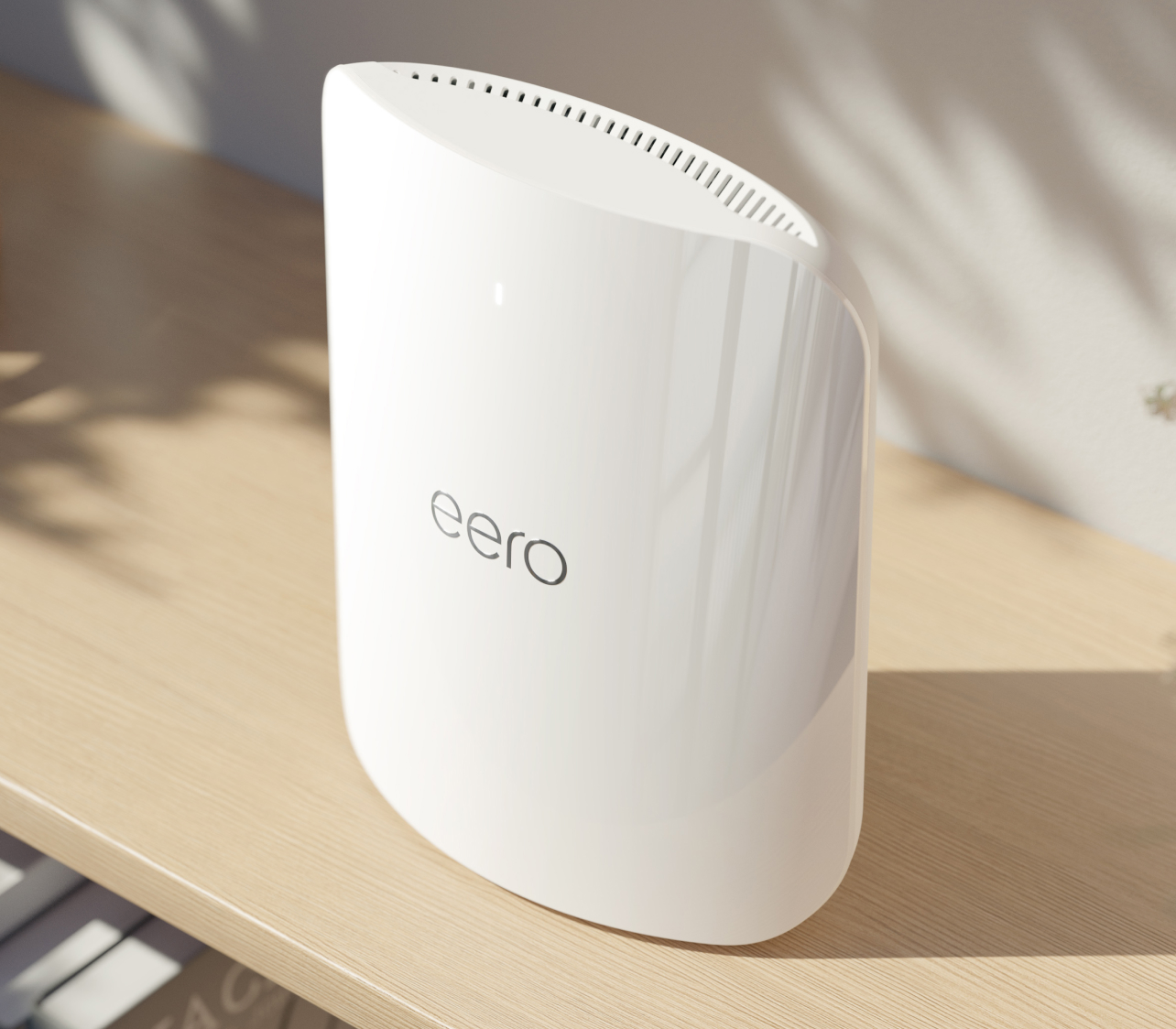
Amazon eero eero Max 7
A polished high-end smart-home mesh whose simplicity carries a substantial premium.
- Excellent speed and range
- 10GbE plus 2.5GbE connectivity
- Matter, Thread and Zigbee hub support
- Device Capacity And Smart Home Fit scores 92/100 in this comparison, among the strongest dimensions evaluated
- Very expensive
- Useful controls sit behind eero Plus
- Minimal advanced configuration
It earns third through a rare combination of 92-rated throughput, 92-rated multi-gig connectivity and class-leading smart-home support, all wrapped in the easiest setup experience among the premium systems. It trails the top two because the hardware is very expensive, the value score falls to 52 and useful controls require eero Plus.
Excellent speed and range. 10GbE plus 2.5GbE connectivity. Very expensive.
Month-scale household testing found high speed, easy setup and useful smart-home integration, while noting price and subscription costs. Long-term failure-rate evidence is not established, so no owner aggregate is converted into a reliability rate.
- Budget buyers and network tinkerers
| Model | eero Max 7 |
|---|
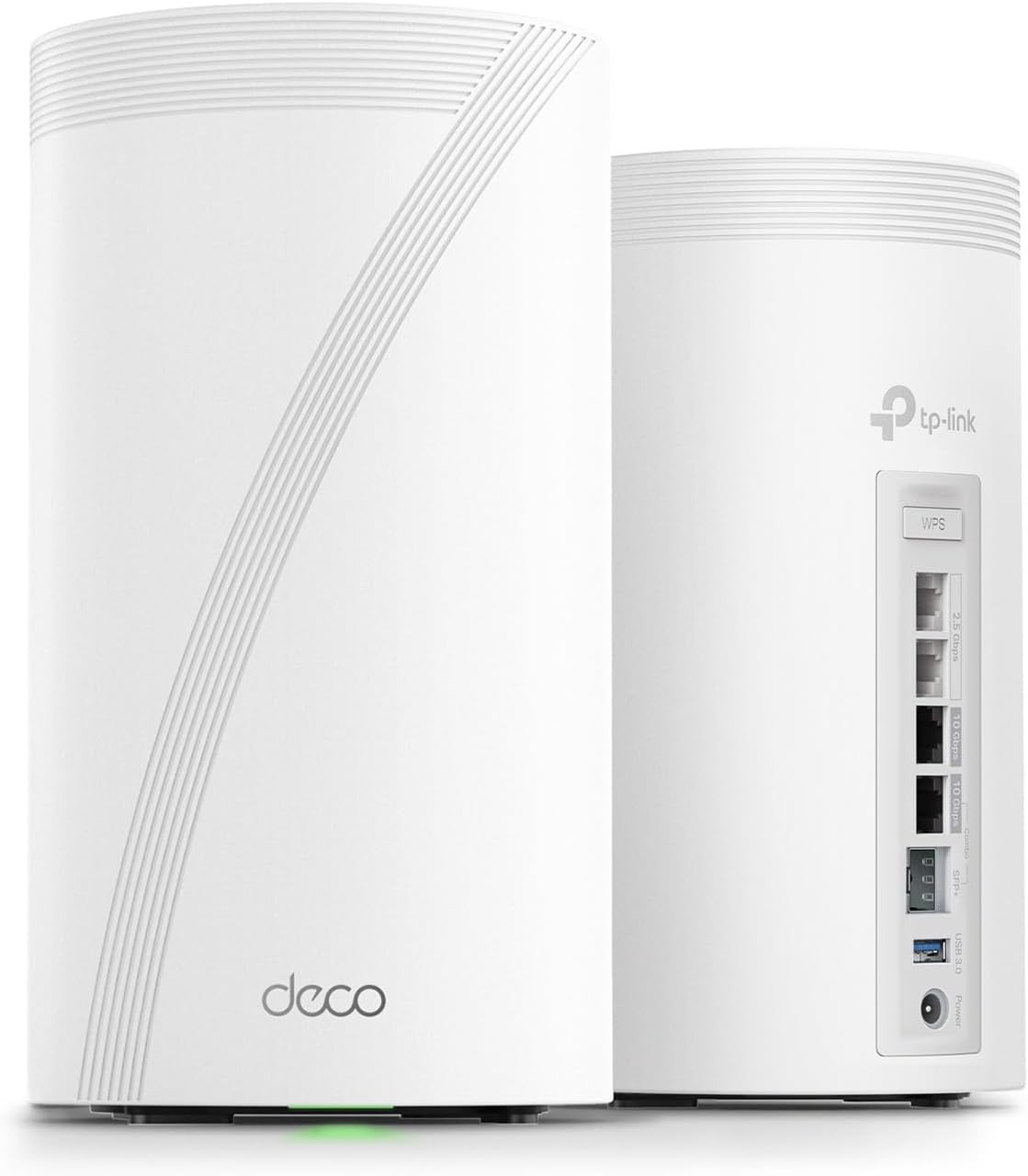
TP-Link Deco BE85
A powerful fiber-ready mesh with exceptional ports, tempered by cost and subscriptions.
- Strong stable coverage
- 10GbE, 2.5GbE and SFP+ flexibility
- Wi-Fi 7 MLO and 320MHz support
- Wired Connectivity And Multigig scores 92/100 in this comparison, among the strongest dimensions evaluated
- High hardware cost
- Paid HomeShield tier for advanced controls
- Overspecified for modest broadband
Fourth place is driven by its standout wired flexibility: 10GbE, 2.5GbE and SFP+ make it one of the best choices for multi-gig fiber and wired backhaul. Strong throughput keeps it competitive with the top three, but its high price, paid HomeShield features and merely average value make the more balanced BE63 easier to recommend broadly.
Strong stable coverage. 10GbE, 2.5GbE and SFP+ flexibility. High hardware cost.
Current test program retains the BE85 for multi-gig fiber users and notes its SFP+ option; results are not directly comparable to other publishers. Long-term failure-rate evidence is not established, so no owner aggregate is converted into a reliability rate.
- Typical sub-gigabit households
| Model | TP-Link Deco BE85 |
|---|
Asus ZenWiFi BT10
Near-flagship speed and stronger controls than most app-only rivals.
- Outstanding peak speed
- Two 10GbE ports per unit
- Deep ASUSWRT management
- Security Privacy And Subscriptions scores 89/100 in this comparison, among the strongest dimensions evaluated
- Premium price
- Tri-band rather than quad-band
- Wi-Fi latency is ordinary
It ranks fifth because it delivers near-flagship Wi-Fi 7 speed, dual 10GbE capability and deeper, subscription-free controls than most app-led rivals. Those strengths make it a better fit for power users than simpler systems below it. A premium price, tri-band design and only ordinary latency prevent it from matching the higher-ranked all-rounders.
Outstanding peak speed. Two 10GbE ports per unit. Premium price.
Outstanding peak speed. Two 10GbE ports per unit. Premium price.
- Buyers wanting the cheapest simple mesh
| Model | Asus ZenWiFi BT10 |
|---|
Asus ZenWiFi ET9
A mature, configurable Wi-Fi 6E choice that trades future-proofing for proven software.
- Mature Wi-Fi 6E platform
- Flexible AiMesh and ASUSWRT controls
- Security features included
- Security Privacy And Subscriptions scores 89/100 in this comparison, among the strongest dimensions evaluated
- Only one 2.5GbE port
- Not Wi-Fi 7
- Older hardware at current-list prices
Sixth place rewards mature firmware, dependable roaming and strong subscription-free security rather than cutting-edge radio technology. It remains a sensible choice for users who value ASUS controls and proven Wi-Fi 6E performance. It sits below the Wi-Fi 7 leaders because it has only one 2.5GbE port and offers less upgrade headroom.
Mature Wi-Fi 6E platform. Flexible AiMesh and ASUSWRT controls. Only one 2.5GbE port.
Mature Wi-Fi 6E platform. Flexible AiMesh and ASUSWRT controls. Only one 2.5GbE port.
- Buyers seeking multi-gig wired backhaul on every node
| Model | Asus ZenWiFi ET9 |
|---|
Asus ZenWiFi AX XT8
A dependable older mesh that remains attractive only at a clear discount.
- Dedicated 5GHz backhaul
- Mature firmware and wide review history
- Good value when discounted
- Security Privacy And Subscriptions scores 89/100 in this comparison, among the strongest dimensions evaluated
- Wi-Fi 6 only
- 2.5GbE limited to WAN
- Slower than newer Wi-Fi 7 choices
It holds seventh on reliability, dedicated 5GHz backhaul and mature subscription-free features, which still make it dependable for sub-gigabit homes. However, Wi-Fi 6 limits its performance ceiling and the lone 2.5GbE WAN port restricts multi-gig use. Its ranking therefore depends heavily on finding it well below newer Wi-Fi 6E and Wi-Fi 7 systems in price.
Dedicated 5GHz backhaul. Mature firmware and wide review history. Wi-Fi 6 only.
Dedicated 5GHz backhaul. Mature firmware and wide review history. Wi-Fi 6 only.
- Multi-gig or Wi-Fi 7 upgrades
| Model | Asus ZenWiFi AX XT8 |
|---|

Amazon eero eero Pro 7
The simplest current eero for large smart homes, with recurring-cost and port-count tradeoffs.
- Very easy setup
- Reliable household operation
- Excellent smart-home integration
- Device Capacity And Smart Home Fit scores 92/100 in this comparison, among the strongest dimensions evaluated
- Only two Ethernet ports
- Advanced features require eero Plus
- Less configurable than ASUS or TP-Link
Eighth place reflects excellent ease of use, reliable roaming and smart-home integration rather than maximum speed or configurability. It is the strongest hands-off option in this part of the list, but only two Ethernet ports, paid advanced features and weaker value reduce its versatility. Buyers who need more control or wired capacity get more from the similarly scored ASUS options.
Very easy setup. Reliable household operation. Only two Ethernet ports.
Household testing found reliable, easy operation and strong smart-home fit; only two ports and paid advanced features limit flexibility. Long-term failure-rate evidence is not established, so no owner aggregate is converted into a reliability rate.
- Users needing many wired devices or deep controls
| Model | eero Pro 7 |
|---|

Netgear Orbi 770 Series
A reliable large-home Wi-Fi 7 system at the Orbi middle tier.
- Broad stable coverage
- 2.5GbE throughout
- Straightforward Orbi setup
- Coverage Backhaul Performance scores 90/100 in this comparison, among the strongest dimensions evaluated
- Expensive subscriptions
- No USB
- Costs more than value competitors
It ranks ninth because broad, stable coverage and 2.5GbE connectivity make it a credible large-home Wi-Fi 7 system, with reliability stronger than its overall position suggests. The problem is value: hardware and subscription costs are high while performance does not clearly surpass cheaper rivals. That combination pushes it below more flexible or easier-to-justify alternatives.
One-month household testing found stable, broad coverage and speeds up to 2.2 Gbps, with subscription costs as the main drawback. Exact-series review adds independent speed, range and app observations for the Wi-Fi 7 three-node configuration.
Exact-series review adds independent speed, range and app observations for the Wi-Fi 7 three-node configuration. Long-term failure-rate evidence is not established, so no owner aggregate is converted into a reliability rate.
- Budget buyers or subscription-averse users
| Model | Netgear Orbi 770 Series |
|---|

TP-Link Deco XE75 / XE5300
A proven value mesh for gigabit-class homes, but not a multi-gig wired platform.
- Strong Wi-Fi 6E value
- 6GHz wireless backhaul option
- Simple Deco setup
- Total Cost And Value scores 87/100 in this comparison, among the strongest dimensions evaluated
- HomeShield extras can cost more
- XE75 and XE5300 naming needs care
- Wired Connectivity And Multigig scores 67/100, lower than this product’s other evaluated dimensions
Tenth place does not mean poor performance: its 87 value score, straightforward setup and 6GHz backhaul remain compelling for internet plans up to 1Gbps. It finishes last because Gigabit Ethernet and older Wi-Fi 6E hardware impose the lowest upgrade ceiling in this field. For buyers who do not need multi-gig networking, it can still be the smartest budget purchase.
Strong Wi-Fi 6E value. 6GHz wireless backhaul option. HomeShield extras can cost more.
Strong Wi-Fi 6E value. 6GHz wireless backhaul option. HomeShield extras can cost more.
- Multi-gig internet or LAN users
| Model | TP-Link Deco XE75 / XE5300 |
|---|
How We Evaluate Wifi Mesh Systems
Our rankings are built through the Flickthru CORE™ Market Research Engine, which first analyses the category, its intended buyers, and the current US market. Products are then assessed using category-specific evidence, performance indicators, availability, ownership signals, and long-term reliability considerations.
Recommendations reflect overall suitability for the intended buyer – not simply the highest specification, lowest price, or strongest result in a single test. When product-level customer feedback is limited, we prioritize official validation, credible technical evidence, and demonstrated category suitability rather than estimating or inflating review counts. Read the full Flickthru product ranking methodology.
- Category Specific Analysis: Defining buyers’ needs, primary uses, business priorities, acceptable compromises, and category-specific requirements before products are compared.
- Long-Term Reliability: Tracking recurring failure patterns, component durability, warranty trends, and long-term ownership outcomes from verified market data.
- Performance: Evaluating category-specific real-world performance, efficiency, consistency, and practical usability rather than relying on marketing claims alone.
- Features: Assessing functionality, usability, build quality, safety, ergonomics, and category-specific capabilities important to long-term ownership.
- Value: Measuring total cost of ownership, lifecycle longevity, support quality, lifecycle suitability, and overall return on investment.
- Evidence Review: Combining verified purchaser feedback where available with professional testing, official product validation, technical evidence, and market suitability signals.
- Market Coverage: Mapping the current US market, credible product families, availability, price positioning, and relevant competitors within the category.
Products demonstrating recurring reliability concerns, inconsistent performance behavior, poor ownership outcomes, or widespread negative sentiment are algorithmically suppressed from our rankings regardless of marketing claims, sponsorship relationships, or short-term popularity trends.
This methodology is designed to identify products that deliver genuine long-term value, reliability, and real-world usefulness rather than simply matching short-term hype, advertising claims, or isolated test results.