
Best Gaming TVs 2026
A category-specific approach to ranking Gaming TVs
Most general product roundups are built around broad buyer priorities. Flickthru evaluates gaming TVs for gamers choosing a TV primarily for console and PC gaming, including PlayStation 5, Xbox Series X|S and gaming PCs. The ranking should identify TVs that deliver excellent gaming performance without sacrificing everyday picture quality, focusing on low input lag, 4K/120Hz and higher refresh support where relevant, HDMI 2.1 capability, VRR/ALLM support, motion clarity, HDR gaming performance, bright-room usability, image quality, platform compatibility, reliability and overall value, prioritizing gaming responsiveness, gaming picture quality, motion and VRR, console and PC compatibility, and room flexibility.
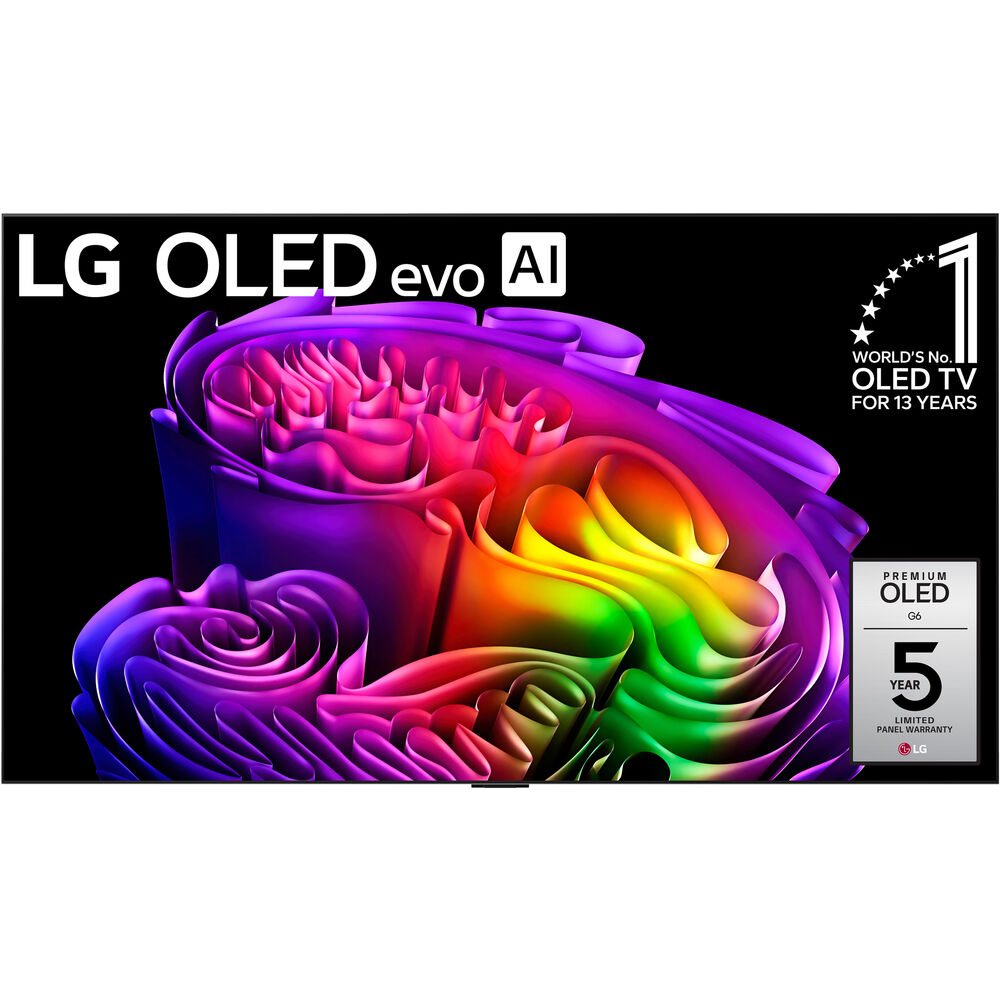
LG G6
A showcase model for demanding mixed-platform setups, especially where daytime viewing matters.
- Exceptional 4K high-refresh gaming responsiveness
- Four HDMI 2.1 ports with broad VRR support
- Outstanding reflection control for an OLED
- 165Hz support with G-SYNC and FreeSync for PC play
- Value and total cost are weak at premium pricing
- Smart TV and daily usability are good rather than category-leading
- Pricier than step-down OLEDs with similar gaming features
The LG G6 pairs near-instant OLED response with 165Hz-class gaming, four full-bandwidth HDMI inputs, broad VRR support and unusually strong reflection control. That combination gives console and PC players the speed they expect from a flagship OLED while keeping HDR impact and screen visibility convincing in brighter rooms where many OLED rivals lose some of their advantage.
Fast pixel response keeps camera pans and rapid movement exceptionally clean, while the 165Hz ceiling gives high-end PC users extra headroom beyond standard 120Hz console play. Four high-bandwidth HDMI inputs also make the set unusually accommodating for multiple consoles, a gaming PC and an eARC audio device.
The G6 is a recent flagship, so long-duration ownership data is still building. Its 82/100 reliability and panel longevity score is more cautious than its gaming results until a broader ownership history accumulates.
- Buyers prioritizing price-to-performance
- Shoppers who want a lower-cost gaming OLED
| Panel type | OLED |
|---|---|
| Resolution | 4K UHD |
| Refresh rate | Up to 165Hz |
| HDMI 2.1 | Four ports |
| Gaming features | NVIDIA G-SYNC, AMD FreeSync, VRR, Dolby Vision gaming |

LG C6
A well-rounded step-down model that suits homes juggling several modern sources.
- Excellent high-refresh responsiveness
- Four HDMI 2.1 ports
- Strong balance of HDR quality and gaming features
- Broad VRR support across PS5, Xbox and PC
- Bright room flexibility is good rather than class-leading
- Smart TV and daily usability are solid but not a key advantage
- Long-term ownership history is still limited
The LG C6 brings fast OLED response, broad VRR support, four HDMI 2.1 inputs and a strong high-refresh gaming mode into a more attainable C-series package. Together, those features make it one of the most versatile choices for households that switch between PS5, Xbox and PC gaming while still wanting deep OLED blacks and strong HDR performance for films and streaming.
The C6 feels immediate in low-latency modes and keeps motion clean during fast turns, racing scenes and high-frame-rate PC play. Its four HDMI 2.1 connections reduce switching compromises, and the combination of VRR, high refresh and OLED contrast makes it especially effective for users who mix competitive play with cinematic single-player games.
As a current-generation C-series model, the C6 has only a short owner history so far. Its 82/100 reliability and panel longevity score is deliberately conservative and should firm up as more long-term ownership data arrives.
- Very bright rooms with uncontrolled reflections
- Buyers focused purely on lowest purchase price
| Panel type | OLED |
|---|---|
| Resolution | 4K UHD |
| HDMI 2.1 | Four ports |
| Gaming features | VRR, ALLM, gaming dashboard, Dolby Vision |

LG G5
A mature premium option whose breadth of hardware support remains a major practical strength.
- Near-instant OLED motion response
- Four HDMI 2.1 inputs with 165Hz support
- Strong HDR brightness for OLED
- G-SYNC and FreeSync support for PC gaming
- Value is only moderate unless discounted
- Bright room flexibility trails the newer G6
- Longevity record is solid rather than exceptional
The LG G5 combines a fast tandem-OLED panel, 165Hz support, four HDMI 2.1 inputs and excellent variable-refresh compatibility with strong HDR brightness. Those traits work together especially well for gamers who want OLED motion clarity, enough ports for several high-bandwidth sources and the flexibility to move between console and high-frame-rate PC gaming without reconfiguring the setup.
The G5 remains extremely responsive in game modes and preserves the crisp motion expected from OLED, with 165Hz support adding useful headroom for capable PCs. Its four high-bandwidth HDMI inputs are a practical advantage for mixed PS5, Xbox and PC systems, particularly when one connection is also reserved for eARC.
The G5 has a longer ownership record than the newest 2026 models, and owner validation sits at 89/100. Its 82/100 reliability and panel longevity score reflects measured rather than exceptional longevity evidence.
- Sunlit rooms where reflection control is the priority
- Buyers wanting the newest generation
| Panel type | OLED |
|---|---|
| Resolution | 4K UHD |
| Refresh rate | Up to 165Hz |
| HDMI 2.1 | Four ports |
| Gaming features | NVIDIA G-SYNC, AMD FreeSync, VRR, Game Optimizer |

Samsung S95H
A no-compromise display aimed at buyers who put room lighting and image punch ahead of price.
- Excellent motion clarity and low-latency gaming
- Superb bright-room reflection handling
- Four high-bandwidth HDMI inputs
- VRR keeps high-refresh PC play smooth and clear
- Value and total cost are poor at flagship pricing
- Smart TV and daily usability are adequate rather than exceptional
- Costs far more than the step-down S90H
The Samsung S95H combines very fast OLED response, 165Hz-class gaming, four high-bandwidth HDMI inputs and excellent anti-reflection performance with vivid QD-OLED HDR color. That mix is particularly effective for premium gaming setups because it preserves low-latency motion and high-refresh capability while remaining easier to see in bright rooms than many glossy OLED competitors.
High-refresh PC play is a major strength, with rapid response helping fine movement remain clear and four HDMI inputs supporting complex source setups. The screen treatment is also valuable during daytime gaming because it suppresses room reflections more effectively than many conventional glossy OLED panels without sacrificing the punchy color associated with QD-OLED.
The S95H is still early in its ownership cycle, so multi-year panel behavior is not yet well documented. Its 80/100 reliability score carries less confidence than its display and gaming results, though owner validation is strong at 94/100.
- Value-focused buyers
- Gamers who specifically require Dolby Vision
| Panel type | QD-OLED |
|---|---|
| Resolution | 4K UHD |
| Refresh rate | Up to 165Hz |
| HDMI inputs | Four high-bandwidth |
| Gaming features | VRR, ALLM, Glare Free screen |

Samsung S90F
A discounted prior-year model that still delivers premium behavior where gamers notice it most.
- Excellent OLED response and motion
- Four HDMI 2.1 inputs
- Outstanding value at current discounted pricing
- Flagship-level OLED gaming features for much less
- Bright room flexibility trails newer matte-screen Samsung OLEDs
- Smart TV and daily usability are not a major advantage
- Panel longevity is average rather than a strength
The Samsung S90F combines fast OLED response, 144Hz-class gaming, four HDMI 2.1 inputs and strong QD-OLED picture quality with aggressive current pricing. That package gives console and PC gamers most of the connectivity and motion advantages associated with much more expensive OLED flagships, making it especially appealing when high refresh, multiple sources and deep OLED contrast all matter.
The S90F remains exceptionally responsive, with crisp OLED transitions and enough refresh headroom for high-frame-rate PC gaming as well as current consoles. Four HDMI 2.1 inputs make it easy to build a multi-source setup, and owner feedback indicates its picture quality and gaming experience remain well regarded in everyday use.
As a prior-year model, the S90F has a fuller ownership record than Samsung’s newest OLEDs, and owner validation stands at 91/100. Its 80/100 reliability and panel longevity score is average for this field rather than a reason to choose it.
- Very bright rooms
- Buyers who require Dolby Vision
| Panel type | QD-OLED |
|---|---|
| Resolution | 4K UHD |
| Refresh rate | Up to 144Hz |
| HDMI 2.1 | Four ports |
| Gaming features | VRR, ALLM, Motion Xcelerator 144Hz |

Hisense U8QG
A performance-focused LCD that favors daylight punch and format flexibility over OLED-style motion purity.
- Extremely bright HDR presentation
- 165Hz gaming with broad VRR support
- Strong value for the feature set
- Anti-reflection screen keeps HDR visible in daylight
- Motion clarity and VRR behavior trail the best OLEDs
- Smart TV and daily usability are functional but not a differentiator
- Isolated owner complaints keep durability middle-of-pack
The Hisense U8QG combines very high Mini-LED brightness, 165Hz gaming, broad VRR support and strong HDR format compatibility in a screen designed for bright-room use. Those strengths make it especially compelling for players who want low-latency gaming and impactful HDR during the day, with enough refresh headroom for both current consoles and faster PC frame rates.
The U8QG responds quickly to controller input and offers unusually high refresh capability for its price tier, while strong full-screen brightness helps HDR highlights remain visible in well-lit rooms. Motion transitions are not as clean as the fastest OLEDs, but its overall gaming feature set is broad and practical for mixed console and PC use.
Owner feedback on the U8QG is strongly positive overall, with owner validation at 89/100. Some isolated complaints keep its 80/100 reliability and panel longevity score moderate rather than exceptional.
- Players most sensitive to pixel-response smearing
- Wide seating arrangements
| Panel type | Mini-LED ULED |
|---|---|
| Resolution | 4K UHD |
| Refresh rate | 165Hz |
| VRR range | 48-165Hz |
| Gaming features | FreeSync Premium Pro, ALLM, Game Bar, anti-reflection screen |

LG C5
A proven previous-generation option whose current appeal comes from maturity and discounting.
- Excellent OLED motion clarity
- Four HDMI 2.1 inputs with 144Hz support
- Very strong value when discounted
- Room for several sources without giving up eARC
- Bright room performance trails newer premium OLEDs
- Reliability and panel longevity are good but not category-leading
- Smart TV and daily usability are solid rather than exceptional
The LG C5 combines 144Hz OLED gaming, four HDMI 2.1 inputs, broad VRR support and very fast pixel response in a mature C-series design. Those capabilities give console and PC gamers a highly flexible platform, and current discounts can make its mix of OLED motion clarity, deep blacks and complete connectivity especially attractive compared with newer models carrying higher launch pricing.
The C5 delivers the immediate response and clean motion that remain central to OLED gaming, with 144Hz support providing useful PC headroom beyond normal console refresh rates. Four HDMI 2.1 connections and mature gaming controls make it easy to accommodate several sources without sacrificing eARC or constantly moving cables.
The C5 has a longer ownership window than the newest 2026 sets, which gives its 82/100 reliability and panel longevity score a firmer base. Its mature platform supports steady confidence, though the evidence stops short of an elite durability rating.
- Very bright rooms
- Buyers who want the newest image processing
| Panel type | OLED |
|---|---|
| Resolution | 4K UHD |
| Refresh rate | Up to 144Hz |
| HDMI 2.1 | Four ports |
| Gaming features | VRR, ALLM, Game Optimizer, Dolby Vision |

Samsung S90H
A sensible upper-midrange route into Samsung’s gaming ecosystem without flagship positioning.
- Very fast OLED response
- Four HDMI 2.1 inputs
- Strong 4K high-refresh compatibility
- Broad VRR and ALLM support across console and PC
- Value is only average at current reference pricing
- Picture quality and HDR are below the flagship OLED tier
- Too new for deep multi-year ownership evidence
The Samsung S90H pairs fast OLED response with high-refresh gaming, four HDMI 2.1 inputs, broad VRR support and strong contrast in a less expensive tier than Samsung’s flagship OLED. The combination suits gamers who want a clean multi-device setup and responsive motion across console and PC play while retaining the deep blacks and immediate pixel transitions that make OLED attractive for games.
Low-latency modes and rapid OLED transitions give the S90H a crisp, responsive feel during fast games, and the four-port HDMI layout works well for households with several current-generation sources. Its HDR presentation is less ambitious than the flagship S95H, but the gaming fundamentals remain strong across 4K console and high-refresh PC use.
The S90H is too new for deep multi-year ownership evidence, so its 80/100 durability score stays conservative. Early owner sentiment is encouraging, with owner validation at 94/100.
- HDR-first buyers seeking maximum color volume
- Budget-focused OLED shoppers
| Panel type | OLED |
|---|---|
| Resolution | 4K UHD |
| HDMI 2.1 | Four ports |
| Gaming features | VRR, ALLM, Gaming Hub, Glare Free |

TCL QM8L
A living-room specialist that emphasizes size, illumination and source flexibility at a competitive cost.
- Excellent bright-room HDR capability
- Four HDMI 2.1 ports
- Strong gaming feature set for the price
- Large-screen friendly with strong daylight punch
- Motion clarity and VRR behavior are clearly weaker than top OLEDs
- Smart TV and daily usability are serviceable rather than standout
- Response-time blur may bother competitive gamers
The TCL QM8L combines high Mini-LED brightness, four HDMI 2.1 inputs, high-refresh gaming and strong value in a large-screen-friendly package. That blend works well for players who game in bright living rooms or connect several modern sources, because it offers far more connectivity and daylight punch than many similarly priced TVs while still supporting the refresh formats expected by current consoles and gaming PCs.
The QM8L offers strong input responsiveness and enough refresh capability for both consoles and faster PC gaming, with four HDMI 2.1 inputs giving it a notable practical advantage. Its slower pixel transitions reduce motion clarity compared with OLED, yet high brightness and broad gaming support keep it competitive for everyday living-room use.
The QM8L is a newer model with limited long-term field history, so confidence in its 80/100 reliability score is lower than in its feature results. Owner validation of 89/100 offers an early real-world check while longer ownership data builds.
- Competitive gamers sensitive to response-time blur
- Dark-room purists who prefer perfect OLED blacks
| Panel type | SQD Mini-LED |
|---|---|
| Resolution | 4K UHD |
| Refresh rate | 144Hz-class |
| HDMI 2.1 | Four ports |
| Gaming features | VRR, Game Accelerator, FreeSync |
| Smart platform | Google TV |

Hisense U75QG
A size-first option for shoppers who want modern inputs and strong daylight output without luxury pricing.
- Excellent 165Hz feature support
- Four HDMI 2.1 ports
- Strong brightness and price-to-size value
- Anti-reflection screen helps in daytime rooms
- Motion clarity and VRR behavior are a significant weakness
- Picture quality and HDR accuracy are good rather than premium
- Slower pixel response softens very fast motion
The Hisense U75QG combines 165Hz gaming, four HDMI 2.1 inputs, strong Mini-LED brightness and a value-focused large-screen proposition. Those strengths make it a practical fit for gamers who want several current-generation sources connected at once and need enough brightness to keep HDR games lively in daytime conditions without paying premium OLED pricing.
Input response is strong and the 165Hz ceiling gives compatible PCs room to run beyond console refresh rates, while four HDMI 2.1 inputs simplify multi-device setups. The main performance limitation is slower pixel response, which can soften very fast motion compared with OLED even though control latency remains competitive.
Owner feedback on the U75QG is strongly positive, with owner validation at 92/100, but long-term evidence is still modest. Its 80/100 reliability and panel longevity score sits mid-field for this group.
- Fast competitive games where response-time clarity matters most
- Wide seating layouts
| Panel type | Mini-LED ULED |
|---|---|
| Resolution | 4K UHD |
| Refresh rate | 165Hz |
| HDMI 2.1 | Four ports |
| Gaming features | Game Mode Ultra, VRR, ALLM, anti-reflection |
How We Evaluate Gaming TVs
Our rankings are built through the Flickthru CORE™ Market Research Engine, which first analyzes the category, its intended buyers, and the current US market. Products are then compared using category-specific evidence rather than a generic checklist applied the same way to every product type.
For Gaming TVs specifically, the evaluation focuses on the dimensions that most directly affect real-world performance, everyday usability, ownership experience, and long-term value:
- Gaming responsiveness: We assess measured input lag, high-refresh operation and how responsively the TV behaves in its lowest-latency gaming mode.
- Gaming picture quality: We judge HDR impact, contrast, color and detail in Game Mode so fast response does not come at the expense of image quality.
- Motion and VRR: We examine motion clarity, VRR stability and frame-rate transitions to see how clean and consistent fast gameplay looks.
- Console and PC compatibility: We check HDMI bandwidth, high-refresh formats, VRR, ALLM and practical compatibility with current consoles and gaming PCs.
- Value and total cost: We compare current US price with gaming capability, useful life and any realistic extra costs needed to get the intended experience.
- Room flexibility: We assess brightness, reflections and viewing angles so the TV remains usable in bright rooms and from typical multiplayer seating positions.
- Reliability and longevity: We look for recurring reliability, firmware and panel-longevity evidence while avoiding age-based penalties when long-term history is not yet available.
- Owner validation: We use verified owner sentiment to corroborate real-world gaming, setup and reliability patterns; review volume affects confidence only, not merit.
- Daily usability: We consider menu speed, setup, gaming controls and smart-TV usability for switching easily between games and everyday viewing.
Products are scored dimension-by-dimension across the same contender field so that the same performance standard is applied consistently to every model. Missing noncritical evidence is left unscored rather than assigned a placeholder score, with the remaining supported dimensions renormalized. Evidence confidence is tracked separately and does not alter product merit.
Documented strengths and weaknesses are cross-checked against the final buyer-facing pros and cons before publication, helping ensure that material scoring findings are reflected in the visible recommendation rather than replaced by generic copy. Read the full Flickthru product ranking methodology.