
Best 4K TVs 2026
A category-specific approach to ranking 4K TVs
Most general product roundups are built around broad buyer priorities. Flickthru evaluates 4K TVs for shoppers looking for the best overall 4K TV for everyday home use across streaming, movies, live TV and gaming. The ranking helps them identify models that deliver the strongest overall combination of picture quality, contrast and black levels, HDR brightness, color accuracy, motion handling, upscaling and processing, gaming performance, smart TV usability, connectivity, sound quality, reliability, warranty/support, owner-review validation and price-to-performance. The ranking prioritizes well-rounded TVs that perform strongly across real-world use over niche models aimed mainly at one specialist use case, with particular weight on overall picture quality, HDR and bright-room performance, motion processing and upscaling, gaming and connectivity, and smart TV usability.
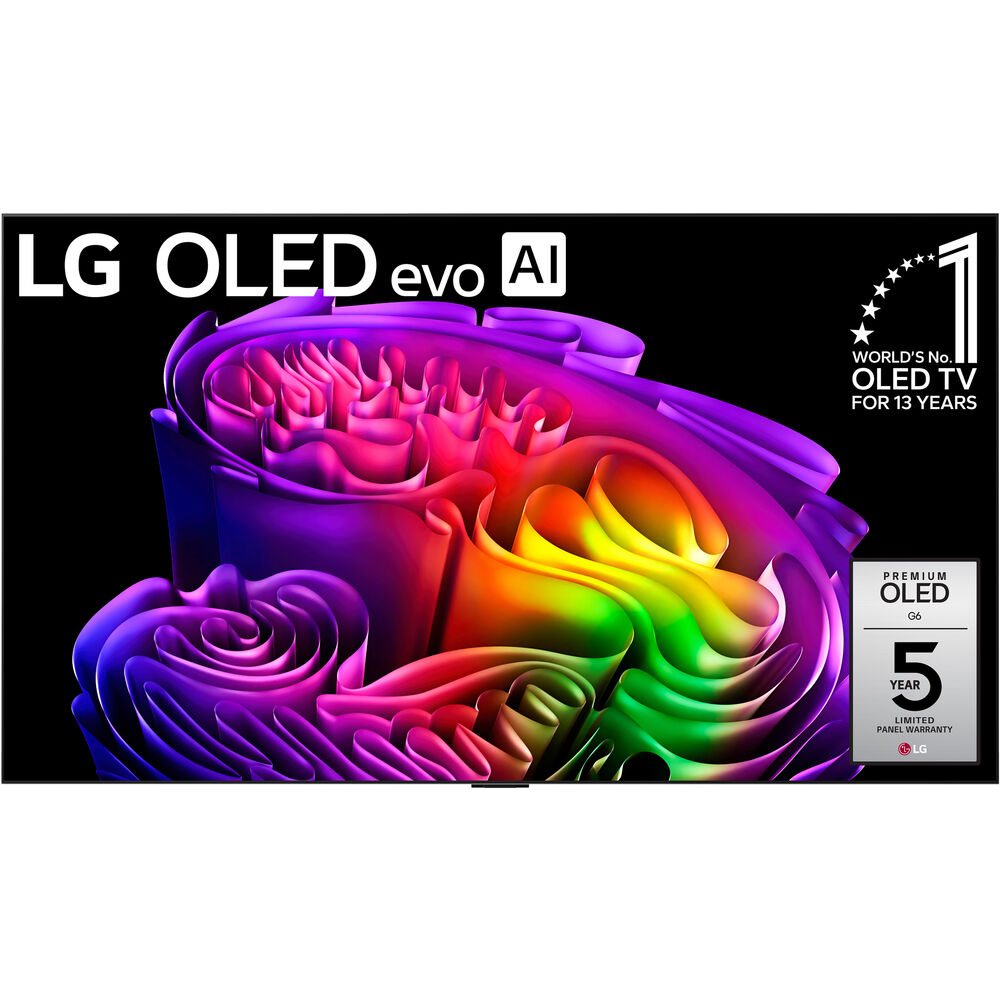
LG G6 OLED
LG G6 is a flagship OLED built around exceptional brightness, reflection control and gaming flexibility. Its picture quality is among the strongest here, while premium pricing and merely solid built-in sound prevent it from being an automatic choice for every buyer.
- Outstanding OLED picture quality with exceptionally strong bright-room performance
- Gaming support stands out with four HDMI 2.1 ports and 165Hz capability
- Reflection handling is markedly improved
- Extremely low 8.9 ms input lag in Boost mode
- Value is weaker than less expensive premium OLED alternatives
- Built-in audio is solid rather than flagship-class
- Premium pricing remains a significant ownership cost
LG G6 pairs a new-generation tandem OLED panel with unusually effective reflection control, very high HDR output and refined motion, while preserving perfect blacks and wide viewing angles. Four full-bandwidth HDMI 2.1 ports, 165Hz PC support and extremely low gaming latency turn that premium picture platform into an unusually complete flagship for both cinematic viewing and serious gaming.
The G6 is one of the strongest OLED performers in the field, combining very high measured HDR output with clean reflections, natural color and smooth motion. Gaming is also a standout, with four HDMI 2.1 inputs and extremely low measured input lag.
- HDR peak brightness: 2,471 nits (Filmmaker Mode)
- Input lag: 8.9 ms (Boost mode)
LG provides an established US support path, and the G-series carries stronger panel-warranty coverage than LG’s mainstream range. That extra cover adds reassurance on a flagship purchase, though it is a support benefit rather than proof of long-term durability.
- Value-first shoppers
- Buyers hoping to skip a soundbar entirely
| Resolution | 4K UHD |
|---|---|
| Display type | Tandem OLED |
| HDMI 2.1 | 4 ports |
| Max refresh rate | 165Hz |
| HDR peak brightness | 2,471 nits (Filmmaker Mode) |
| Input lag | 8.9 ms (Boost mode) |

Samsung S95F OLED
Samsung S95F remains highly competitive because its bright OLED picture, glare control and gaming hardware are now paired with stronger street pricing. Tizen clutter, the absence of Dolby Vision and the trade-offs of its matte screen are the main reasons newer or differently tuned rivals may suit some buyers better.
- Excellent OLED picture quality with high brightness and effective glare reduction
- Gaming support is outstanding with four HDMI 2.1 ports and 165Hz
- Current discounts improve value substantially
- Responsive gaming performance for consoles and PCs
- Tizen smart usability is cluttered and can feel ad-heavy
- No Dolby Vision support
- The matte screen can trade some dark-room gloss for bright-room usability
Samsung S95F still delivers bright QD-OLED color, deep blacks and excellent glare control, backed by four HDMI 2.1 inputs and 165Hz gaming support. With 2025 flagship performance now available at substantially lower street prices, it offers an unusually strong mix of premium picture quality, daytime usability and gaming capability for buyers willing to choose a previous-generation model.
The S95F remains a very strong bright-room OLED with excellent color, glare reduction and gaming responsiveness. Its 2025 status now improves value, though Tizen clutter and the lack of Dolby Vision remain persistent usability/format compromises.
As a 2025 model, the S95F has a larger owner-review pool and a mature US support route behind it. Owner feedback includes some isolated complaints, reflected in its 86/100 owner-validation score.
- Dolby Vision users
- Buyers wanting the cleanest smart-TV interface
| Resolution | 4K UHD |
|---|---|
| Display type | QD-OLED |
| Screen finish | Matte, glare-reducing |
| HDMI 2.1 | 4 ports |
| Max refresh rate | 165Hz |
| Smart platform | Tizen |

Samsung S95H OLED
Samsung S95H combines very high QD-OLED brightness, effective glare reduction and exceptional gaming connectivity. Its core picture performance is outstanding, but weak built-in sound, busy Tizen presentation and high pricing are meaningful drawbacks that should be weighed against that strength.
- Outstanding QD-OLED picture quality and bright-room visibility
- Gaming connectivity is exceptionally complete with four HDMI 2.1 ports and 165Hz
- Glare-free screen is highly effective
- Comprehensive VRR features suit high-refresh console and PC play
- Built-in audio is underwhelming for a flagship TV
- Value is weak at the current premium price
- Tizen usability is feature-rich but can feel busy and ad-heavy
Samsung S95H pairs unusually high QD-OLED brightness with deep blacks, vibrant color and an effective glare-free surface that keeps the picture usable in difficult daylight. Four HDMI 2.1 ports, 165Hz support and comprehensive VRR features make the same panel exceptionally capable for gaming, creating a rare flagship that is equally convincing for daytime viewing, movies and high-refresh play.
Picture performance is elite, especially in bright rooms where the matte glare-free coating and high OLED output work together effectively. Gaming is also top-tier, while the main practical drawbacks are weaker built-in sound, busy smart-TV presentation and the continued lack of Dolby Vision.
- HDR peak brightness: 2,721 nits in independent testing
The S95H scores 84/100 for reliability, longevity, warranty and support, with Samsung’s current US support behind it. As a current flagship its long-term ownership record is still building, and buyers paying its premium price should weigh that alongside its 89/100 owner-validation score.
- Buyers who want Dolby Vision
- Shoppers wanting strong built-in speakers or maximum value
| Resolution | 4K UHD |
|---|---|
| Display type | QD-OLED |
| Screen finish | Matte, glare-free |
| HDMI 2.1 | 4 ports |
| Max refresh rate | 165Hz |
| HDR peak brightness | 2,721 nits |

Sony BRAVIA 9 II
Sony BRAVIA 9 II is a premium RGB Mini-LED focused on brightness, image processing and bright-room picture control. It is particularly compelling for films, sports and broadcast content, although two HDMI 2.1 inputs and flagship pricing reduce its gaming and value appeal.
- Outstanding RGB Mini-LED picture quality with very high HDR brightness
- Motion processing and upscaling are among the strongest in the field
- Anti-reflective treatment is excellent for bright rooms
- Precise local dimming keeps bright and dark scenes controlled
- Gaming connectivity is limited to two HDMI 2.1 ports and 120Hz
- Value is weak at its flagship asking price
- Off-angle contrast still cannot fully match OLED
Sony BRAVIA 9 II combines exceptionally high RGB-backlight brightness with precise local dimming, refined shadow detail and exceptional image processing, producing unusually controlled pictures in both bright and dark scenes. Its anti-reflective screen, strong motion handling and natural upscaling make it especially compelling for premium movie, broadcast and sports viewing where processing quality matters as much as raw luminance.
The BRAVIA 9 II is one of the strongest non-OLED pictures available, with enormous HDR headroom and excellent anti-reflection behavior. Sony’s processing remains a major strength, but its two HDMI 2.1 inputs and 120Hz ceiling make the gaming proposition less complete than LG, Samsung and TCL flagships.
- HDR peak brightness: 3,989 nits (10% window) in independent testing
Sony provides a current US support route for the BRAVIA 9 II, which scores 86/100 for reliability and support. Owner feedback is positive, with an 89/100 owner-validation score.
- Multi-console gaming setups
- Value-first buyers
| Resolution | 4K UHD |
|---|---|
| Display type | RGB Mini-LED |
| Screen finish | Anti-reflective |
| HDMI 2.1 | 2 ports |
| Max refresh rate | 120Hz |
| HDR peak brightness | 3,989 nits (10% window) |

LG C6 OLED 2026
LG C6 is one of the most balanced choices in the field, combining OLED contrast, mature processing and unusually complete gaming support. It gives up some HDR impact and speaker strength versus the very best flagships, but its broader all-round value remains strong.
- Excellent OLED picture quality with deep blacks and strong color
- Gaming connectivity is outstanding with four HDMI 2.1 ports and up to 165Hz
- webOS usability is quick and straightforward
- Very low 9.2 ms input lag for responsive gaming
- HDR brightness and bright-room performance trail the strongest flagship RGB/OLED sets
- Built-in audio is only adequate and benefits from a soundbar
- The improvement over the previous C-series generation is incremental
LG C6 combines OLED-level blacks, accurate color, strong processing and unusually complete gaming connectivity, including four HDMI 2.1 inputs and high-refresh PC support. Its mix of cinematic picture quality, fast everyday webOS operation and current pricing makes it one of the most rounded choices for buyers who want one TV to handle movies, streaming and gaming well.
The C6 is strongest as a balanced all-rounder: OLED contrast remains excellent, processing is mature and gaming support is among the most complete in the field. HDR is bright for a mainstream OLED but the very brightest flagship OLED and RGB-backlit competitors retain more impact in difficult daytime conditions.
- Input lag: 9.2 ms
LG C6 OLED 2026 scores 84/100 for reliability, longevity, warranty and support, building on LG’s mature C-series platform. Owner validation is 92/100, though as a 2026 model its long-term ownership history is still limited.
- Very bright rooms where the brightest RGB/Mini-LED sets have an advantage
- Buyers prioritizing strong built-in speakers
| Resolution | 4K UHD |
|---|---|
| Display type | OLED |
| HDMI 2.1 | 4 ports |
| Max refresh rate | 165Hz |
| Input lag | 9.2 ms |
| Smart platform | webOS |

Samsung S90H OLED
Samsung S90H is a value-oriented current OLED that combines excellent gaming connectivity, practical glare control and stronger-than-expected built-in sound. Its overall picture and HDR performance are less exceptional than flagship OLEDs, but the balance is attractive at its lower price.
- Excellent gaming connectivity and high-refresh support
- Value is strong for a current-generation OLED
- Built-in audio is better than expected for its class
- Four HDMI 2.1 inputs make multi-console setups easy
- Overall picture and HDR performance are less exceptional than the flagship OLEDs
- Smart TV usability is weakened by Tizen’s busy, ad-heavy interface compared with cleaner platforms
- Panel technology can vary by size, so buyers should confirm the exact configuration
Samsung S90H combines a glare-resistant OLED screen, four HDMI 2.1 inputs and high-refresh gaming support with pricing that sits well below the flagship tier. Its strong owner satisfaction, responsive smart platform and better-than-expected built-in sound make it a practical premium choice for mixed living-room use, especially for buyers who value gaming capability and daytime visibility over absolute flagship picture performance.
The S90H is strongest on gaming, practical bright-room use and value rather than absolute picture leadership. Its OLED contrast and anti-glare coating are effective, while sound is notably better than expected, but flagship models retain stronger HDR/color capability.
Samsung’s current US support and a growing owner-review pool give buyers a reasonable view of ownership. Some owners report isolated sync or software complaints, which point to software quirks rather than a hardware concern.
- Buyers chasing flagship HDR brightness
- Dolby Vision users
| Resolution | 4K UHD |
|---|---|
| Display type | OLED (panel varies by size) |
| Screen finish | Glare-resistant |
| HDMI 2.1 | 4 ports |
| Smart platform | Tizen |

TCL X11L
TCL X11L is designed for buyers who want enormous HDR impact, big-screen scale and better-than-average built-in audio. Its image can look spectacular in bright rooms, though the extreme price and less-refined motion performance weaken its overall value.
- Exceptional HDR brightness and vivid color volume
- Minimal blooming for a very bright Mini-LED design
- Strong built-in audio and useful connectivity
- Picture stays vivid and punchy in large bright rooms
- Value is weak because the X11L carries extreme flagship pricing
- Motion handling trails the best rivals despite the strong HDR picture
- Very large screen sizes make placement and installation more demanding
TCL X11L delivers some of the strongest HDR brightness in the field while keeping blacks impressively deep and blooming tightly controlled for an LCD-based display. Its combination of huge-screen availability, high color volume, capable gaming connectivity and stronger-than-average built-in sound gives bright-room home theaters a genuinely premium alternative to OLED when sheer luminance and scale matter most.
Brightness, color intensity and local-dimming control are the X11L’s defining strengths. It remains responsive for gaming and sounds better than many rivals, though motion clarity is not as clean as the best OLED and processing-led competitors.
TCL X11L scores 82/100 for reliability and support, backed by TCL’s established US support route. Its very large screen sizes make delivery and installation more demanding, so buyers should check setup and service arrangements before buying.
- Value-conscious buyers
- Viewers especially sensitive to motion blur
| Resolution | 4K UHD |
|---|---|
| Display type | SQD Mini-LED |
| Smart platform | Google TV |
| Model | 75X11L |

TCL QM8L
TCL QM8L delivers unusually high brightness, strong local dimming and excellent gaming connectivity for substantially less than many flagships. Motion clarity in Game Mode, average speakers and less-consistent out-of-box color are the main compromises.
- Extremely strong HDR brightness for the price
- Excellent value relative to similarly capable premium TVs
- Four HDMI 2.1 ports and strong gaming support
- Strong daytime visibility with deep local-dimming blacks
- Motion handling in Game Mode is a real weakness and can look blurrier than rivals
- Built-in audio lacks the low-end weight of stronger premium sets
- Out-of-box color accuracy is less consistent than the best competitors
TCL QM8L combines extremely high HDR brightness, deep local-dimming blacks and four HDMI 2.1 inputs at a price well below most flagship televisions. That blend gives buyers unusually strong daytime visibility, punchy HDR movies and modern console support without paying top-tier OLED or RGB-backlight money, making it especially compelling when performance per dollar matters.
The QM8L is exceptionally bright and its local dimming keeps blacks convincing, while gaming connectivity is unusually complete for the price. Its main technical compromise is motion clarity in Game Mode, where slower pixel transitions can make fast movement look softer than on the better motion performers.
- Input lag: 9.5 ms
TCL’s current US product and support route is established. As a recent release, the QM8L’s long-term ownership history is still maturing, though early owner feedback is strong.
- Motion-sensitive viewers
- Buyers seeking premium built-in audio
| Resolution | 4K UHD |
|---|---|
| Display type | SQD Mini-LED |
| HDMI 2.1 | 4 ports |
| Input lag | 9.5 ms |
| Smart platform | Google TV |

Sony BRAVIA 8 II
Sony BRAVIA 8 II is a cinema-oriented OLED with superb processing, rich color and some of the best built-in sound in the field. Bright-room HDR performance, gaming-port breadth and relative value are notably weaker than its movie-focused strengths.
- Excellent cinematic OLED picture quality and color volume
- Motion processing and upscaling are exceptional
- Built-in audio is among the best in the field
- Natural upscaling gives broadcast and streaming content a polished look
- HDR and bright-room performance are noticeably weaker than flagship rivals
- Only two HDMI 2.1 inputs, with a 120Hz ceiling
- Value is weak relative to brighter, cheaper OLED alternatives
Sony BRAVIA 8 II combines QD-OLED blacks and color with exceptionally refined motion, upscaling and screen-driven audio, giving films and television a polished, cinematic presentation. Its wide viewing angles, strong shadow detail and unusually capable built-in speakers make it especially attractive for movie-focused rooms where natural processing and sound quality matter more than maximum brightness or four-port gaming connectivity.
Dark-room picture quality is excellent, with perfect blacks, rich color and very strong processing, while audio is a genuine advantage. Bright-room visibility, peak HDR impact and gaming input breadth lag the newest Samsung, LG and RGB Mini-LED flagships.
Sony’s current US support route is established. Sony has publicly acknowledged a recent software/eARC issue and provided a software-fix path, so it is best viewed as a software consideration rather than a sign of broad hardware unreliability.
- Very bright rooms
- Multi-console/high-refresh PC gaming
| Resolution | 4K UHD |
|---|---|
| Display type | QD-OLED |
| HDMI 2.1 | 2 ports |
| Max refresh rate | 120Hz |

Sony BRAVIA 7 II
Sony BRAVIA 7 II offers strong RGB Mini-LED color, excellent motion and polished processing at a lower tier than Sony’s flagship. It is a particularly good fit for sports and mixed television viewing, though connectivity and built-in audio remain modest for the price class.
- Excellent motion processing and realistic color reproduction
- Strong HDR brightness for a step-down RGB Mini-LED
- Google TV is easy to navigate and broadly supported
- Realistic upscaling suits sports and broadcast television
- Just two HDMI 2.1 ports limit multi-console setups
- Reliability/support is weakened by a documented Android 14 LPCM-over-ARC audio-sync defect that can develop after HDMI mode or refresh-rate changes
- Built-in audio is only average for a premium Sony TV, while viewing angles and blooming still trail OLED
Sony BRAVIA 7 II brings much of Sony’s True RGB color advantage to a less expensive tier, combining strong HDR output with excellent motion handling and realistic upscaling. Its polished Google TV experience, wide size range and capable local dimming make it a persuasive choice for sports, broadcast television and mixed family viewing without stepping all the way up to Sony’s flagship price.
Color, motion and processing are the main strengths, and measured gaming latency is competitive for Sony. The two-port HDMI 2.1 layout, average sound and some off-axis/blooming limitations stop it matching the most complete premium sets.
- Input lag: 10.4 ms
- SDR brightness: 608 nits (Standard), 663 nits (Cinema)
Sony provides a current US support route, but a September 2026 independent test update documented a significant reproducible LPCM-over-ARC audio-sync issue on BRAVIA 7 II after HDMI handshakes. Buyers using ARC audio systems should factor in this software issue, which is the main reason the model scores a lower 75/100 for reliability and support.
- Four-port gaming setups
- Buyers expecting flagship-level built-in sound
| Resolution | 4K UHD |
|---|---|
| Display type | RGB Mini-LED |
| HDMI 2.1 | 2 ports |
| Input lag | 10.4 ms |
| SDR brightness | 608 nits (Standard), 663 nits (Cinema) |
| Smart platform | Google TV |
How We Evaluate 4K TVs
Our rankings are built through the Flickthru CORE™ Market Research Engine, which first analyzes the category, its intended buyers, and the current US market. Products are then compared using category-specific evidence rather than a generic checklist applied the same way to every product type.
For 4K TVs, the evaluation focuses on the dimensions that most directly affect real-world viewing quality, everyday usability, ownership experience, and long-term value:
- Overall Picture Quality: Contrast, black levels, color accuracy, uniformity, shadow detail, and overall image fidelity.
- HDR & Bright-Room Performance: HDR impact, peak and sustained brightness, reflection handling, color volume, and visibility in brighter rooms.
- Motion Processing & Upscaling: Motion clarity, low-quality-content cleanup, broadcast handling, upscaling, and preservation of fine detail.
- Gaming & Connectivity: HDMI 2.1 support, refresh-rate capability, VRR and ALLM, responsiveness, input flexibility, and compatibility with modern consoles and PCs.
- Reliability, Longevity, Warranty & Support: Documented product-specific reliability evidence, recurring defects where verified, durability, warranty coverage, software support, and service quality. A newer model is not penalized simply because long-term history is limited.
- Value & Total Cost of Ownership: The picture quality, performance, useful features, support, and ownership utility delivered for the current US price rather than treating lower price alone as better value.
- Smart TV Usability: Interface responsiveness, navigation, app support, menu design, advertising load, software behavior, and everyday ease of use.
- Owner Review Validation: Attributable owner sentiment where sufficient review evidence exists. Review volume affects evidence confidence only and does not directly raise or lower product merit.
- Built-In Audio: Dialogue clarity, tonal balance, bass, scale, speaker capability, and how strongly the TV benefits from an external sound system.
Products are scored dimension-by-dimension across the same contender field so that the same performance standard is applied consistently to every model. Missing noncritical evidence is left unscored rather than assigned a placeholder score, with the remaining supported dimensions renormalized. Evidence confidence is tracked separately and does not alter product merit.
Documented strengths and weaknesses are cross-checked against the final buyer-facing pros and cons before publication, helping ensure that material scoring findings are reflected in the visible recommendation rather than replaced by generic copy. Read the full Flickthru product ranking methodology.