
Best Projectors for Home Theater 2026
A category-specific approach to ranking home theater projectors
Most general product roundups are built around broad buyer priorities. Flickthru evaluates home theater projectors for buyers choosing a projector primarily for a dedicated or mixed-use home theater, including movie nights, streaming and cinematic TV viewing. The ranking should identify projectors that deliver the strongest overall home-theater experience, focusing on real-world picture quality, black levels and contrast, HDR performance, color accuracy, brightness for the intended room, sharpness and image processing, lens flexibility and placement, motion handling, fan noise, smart-platform usability, reliability, ownership costs and overall value, prioritizing contrast and black levels, HDR and tone mapping, color accuracy, brightness and screen fit, and detail and motion.

Epson Pro Cinema LS12000
Mature premium all-rounder with exceptional installation flexibility.
- Excellent motorized lens flexibility
- Strong brightness and color
- Mature ownership record
- Generous optical shift eases theater integration
- Contrast and black levels trail the best JVC projectors
- HDR tone mapping is behind newer leaders
- Large chassis needs permanent installation
The Epson Pro Cinema LS12000 combines strong contrast, excellent color accuracy, high usable brightness and one of the most flexible motorized lens systems in its price class. Its balanced picture and generous optical shift make it especially easy to integrate into serious home theaters, while the quiet laser design supports long movie sessions without drawing attention to the hardware.
The LS12000 produces a bright, clean and colorful image with broad lens shift and quiet operation. It cannot match JVC black levels or the newest dynamic tone mapping, but remains exceptionally practical.
The LS12000 has a substantial ownership history, and owner feedback is strongly positive (owner validation 91/100), with praise for picture quality, brightness and low noise.
- Buyers who want JVC-level contrast and black depth.
| Resolution | 4K PRO-UHD |
|---|---|
| Light source | Laser |
| Brightness | 2,700 lumens |
| HDMI 2.1 | Yes |
| Refresh rate | 120Hz |
| Lens | Motorized shift and zoom |
XGIMI TITAN Noir Max
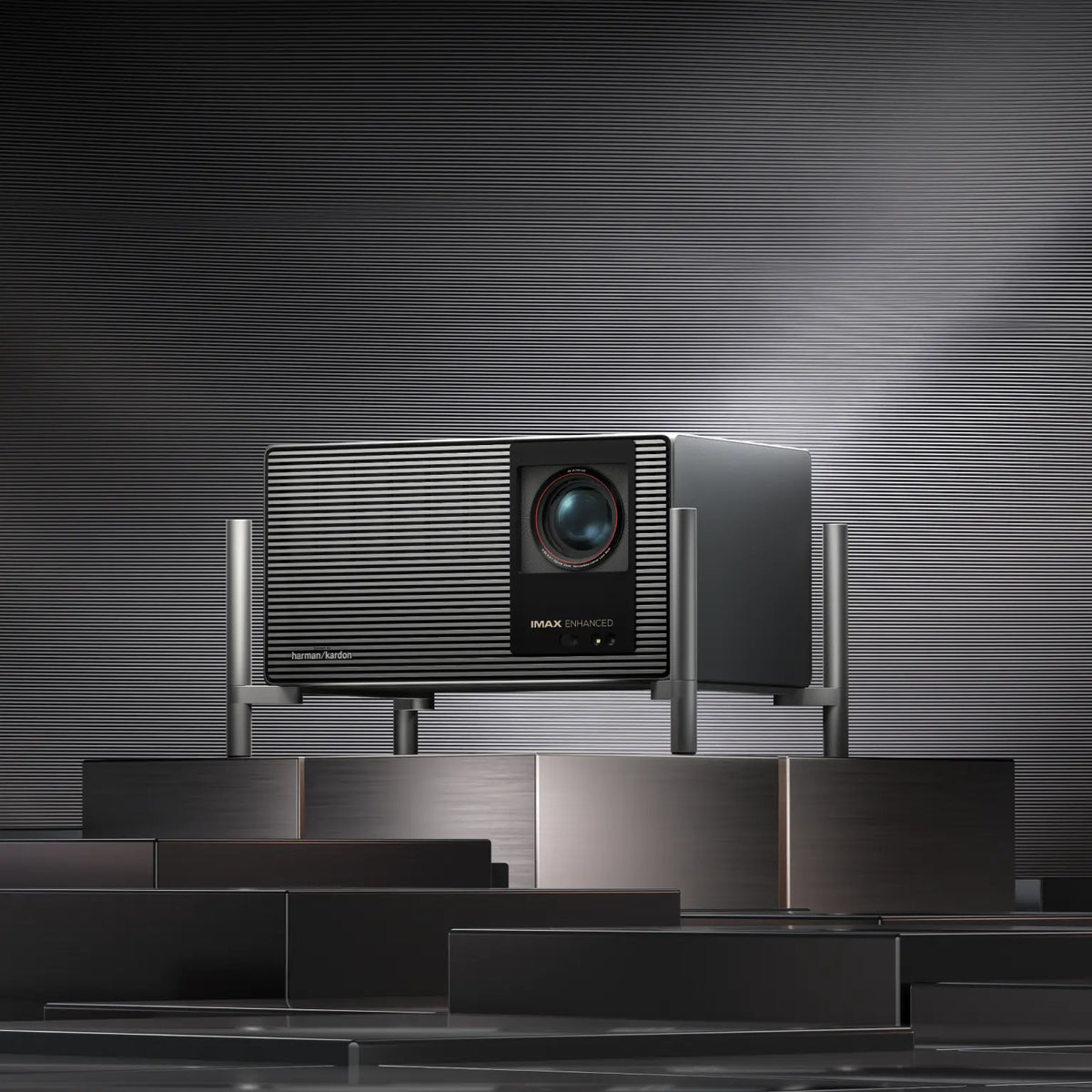
Very bright triple-laser cinema with unusually flexible placement.
- Exceptional brightness
- Strong DLP contrast
- Excellent lens shift and zoom flexibility
- Enough light for ambitious screen sizes
- Value and total cost are only moderate at flagship pricing
- Black levels trail premium D-ILA
- Flagship outlay with limited ownership history
The XGIMI TITAN Noir Max combines exceptionally high brightness with strong DLP contrast, vivid triple-laser color and unusually flexible motorized lens shift and optical zoom. That blend gives it rare versatility for home theater, producing a large, colorful image with enough light for ambitious screen sizes while retaining much stronger dark-scene depth than typical lifestyle projectors.
Independent testing found the TITAN Noir Max exceptionally bright with strong home-theater contrast, and reviewers also praised its color accuracy and setup flexibility. Absolute black level remains behind premium D-ILA designs.
This is a new 2026 platform with limited long-term ownership history, so reliability confidence remains conservative.
- Value-focused buyers, since flagship pricing keeps total cost only moderate.
| Imaging | DLP |
|---|---|
| Light source | Triple laser |
| Lens | Motorized shift and optical zoom |

JVC DLA-NZ700
Sweet-spot JVC cinema with strong black levels and HDR finesse.
- Superb contrast and black depth
- Class-leading HDR tone mapping
- Sharp native-4K image
- Strong black floor gives dark scenes real depth
- Value and total cost remain weak at premium pricing
- Brightness is moderate for very large screens
- Installation flexibility is below the most versatile motorized-lens leaders
The JVC DLA-NZ700 brings superb D-ILA black levels, highly effective dynamic tone mapping and sharp native-4K imaging into a smaller chassis than JVC’s top models. Its combination of deep contrast, accurate color and flexible motorized lens controls makes it especially compelling for dedicated movie rooms where cinematic depth and HDR consistency matter more than headline brightness.
The NZ700 keeps JVC’s strong black floor, accurate native-4K detail and excellent dynamic HDR processing. Its 2,300-lumen light source is adequate for controlled theaters but leaves less headroom than the brightest lifestyle lasers.
The NZ700 is built on JVC’s established laser D-ILA architecture, giving it a mature technical base for long-term ownership.
- Buyers watching costs, as premium pricing keeps value and total cost weak.
| Imaging | D-ILA |
|---|---|
| Resolution | Native 4K |
| Light source | Laser |
| Brightness | 2,300 lumens |
| HDR | Dynamic tone mapping |
| Lens | Motorized |

JVC DLA-NZ800
Reference-grade dark-room cinema with exceptional blacks and HDR control.
- Exceptional black levels and native contrast
- Outstanding HDR tone mapping
- Superb native-4K detail
- Preserves shadow texture in dark film scenes
- Value and total cost are very weak at ultra-premium pricing
- Brightness is lower than the highest-output lifestyle lasers
- Large chassis limits installation flexibility
The JVC DLA-NZ800 combines exceptional native contrast, class-leading black levels, sophisticated frame-by-frame HDR tone mapping and extremely refined native-4K detail. Those strengths work together to create a genuinely cinematic image in a dark theater, preserving shadow texture and depth while keeping HDR highlights controlled and natural across demanding film material.
Independent testing shows exceptionally deep blacks, very high contrast and refined HDR tone mapping. Premium optics preserve fine detail, although brightness is aimed at controlled theaters rather than ambient-light use.
The NZ800 uses JVC’s current laser D-ILA platform, which has an established technical base, though its large chassis calls for a committed installation.
- Buyers on a budget, since ultra-premium pricing makes value and total cost very weak.
| Imaging | D-ILA |
|---|---|
| Resolution | Native 4K |
| Light source | Laser |
| HDR | Frame-by-frame tone mapping |

Valerion VisionMaster Max
Lifestyle convenience with unusually serious dark-room credentials.
- Strong contrast and dynamic black behavior
- Excellent optical setup flexibility
- Rich triple-laser color
- Very good color accuracy in independent testing
- Value and total cost are weaker than the Pro 2
- Reliability history is still developing
- Dynamic black processing needs careful tuning
The Valerion VisionMaster Max combines strong DLP contrast, richly saturated triple-laser color, a highly effective dynamic black system and excellent optical placement flexibility. Its motorized zoom and large vertical lens shift make it easier to integrate than most lifestyle projectors, while the refined color and dark-scene performance give movies more convincing depth.
Independent testing found strong contrast and very good color, while the dynamic black system can materially deepen dark scenes. Aggressive dimming can require careful setup to avoid color shift or clipped HDR detail.
The Max is relatively new, with limited long-duration field history despite encouraging current evidence.
- Buyers focused on value, since the VisionMaster Pro 2 scores better on value and total cost.
| Resolution | 4K |
|---|---|
| Imaging | DLP |
| Light source | Triple laser |
| Lens | Motorized zoom, large vertical shift |
| Dynamic black | Yes |

Hisense XR10
Flagship brightness and optical flexibility for very large screens.
- Extremely high light output
- Wide optical zoom and hardware lens shift
- Excellent color volume
- Lights very large screens with vivid HDR punch
- Value and total cost are weak at flagship pricing
- Contrast and black levels trail premium D-ILA
- Flagship price buys brightness more than black depth
The Hisense XR10 pairs enormous light output with a seven-step iris, wide optical zoom, hardware lens shift and unusually broad triple-laser color. That combination makes it exceptionally adaptable for large home-theater screens, delivering vivid HDR and strong image punch while preserving far more placement freedom than most lifestyle projectors.
Independent reviews consistently praise the XR10’s brightness, color and adjustable optics. Its iris gives useful control over black level versus light output, but darkest blacks remain behind premium D-ILA projectors.
The liquid-cooling design is promising, but long-term owner evidence remains limited because the XR10 is new.
- Buyers on a tighter budget, as flagship pricing weakens its value.
| Resolution | 4K |
|---|---|
| Light source | Triple laser |
| Iris | Seven-step |
| Lens | Optical zoom, hardware lens shift |
| Cooling | Liquid cooling |

JVC DLA-NZ500
Compact native-4K JVC with strong blacks and good HDR value.
- Excellent native contrast
- Strong dynamic HDR tone mapping
- Compact native-4K design
- Premium JVC HDR processing at a lower tier
- Brightness is limited for very large screens
- Value and total cost remain premium
- Installation flexibility is reduced versus higher-tier motorized systems
The JVC DLA-NZ500 delivers the core strengths that make D-ILA projectors desirable for cinema: deep blacks, strong native contrast, accurate color and highly capable dynamic HDR tone mapping. By pairing those fundamentals with a compact native-4K laser chassis and motorized lens controls, it offers a convincing entry point into premium dedicated home theater.
Independent testing indicates strong black-level performance, good gamut coverage and effective dynamic HDR tone mapping. The 2,000-lumen output suits controlled rooms best, while motorized optics keep installation flexible.
The laser light source removes routine lamp replacement, and the NZ500 shares JVC’s established laser D-ILA platform with its higher-tier siblings.
- Buyers with very large screens, where its brightness becomes limiting.
| Imaging | D-ILA |
|---|---|
| Resolution | Native 4K |
| Light source | Laser |
| Brightness | 2,000 lumens |
| HDR | Dynamic tone mapping |
| Lens | Motorized |

Valerion VisionMaster Pro 2
High-value triple-laser performance with useful smart features.
- Excellent color for the price
- Useful optical zoom and smart platform
- Very strong value and total cost
- Rich wide-gamut images from RGB triple laser
- Native contrast is a step below D-ILA designs
- Installation flexibility is below large-shift designs
- Dark scenes lack the depth of JVC units
The Valerion VisionMaster Pro 2 combines strong color, capable dynamic HDR processing, flexible optical zoom and an integrated smart platform at a price well below premium dedicated-theater projectors. That balance gives it unusually broad appeal for movie rooms, delivering rich wide-gamut images and practical setup flexibility without demanding a five-figure installation budget.
Reviewers reported rich color, capable contrast and useful dynamic tone mapping. Absolute black depth trails premium JVC units, but the price-to-performance ratio is much stronger.
Best Buy owner sentiment is excellent at 4.9/5 from 14 reviews, though the sample is still modest.
- Buyers who want premium D-ILA contrast and black levels.
| Resolution | 4K |
|---|---|
| Light source | RGB triple laser |
| Brightness | 3,000 ISO lumens |
| Lens | Optical zoom |
| Smart platform | Integrated |

Epson QB1000
Brighter Epson premium projector with improved HDR and large-screen ability.
- Exceptional measured brightness
- Excellent motorized lens system
- Strong HDR tone mapping
- Flexible optics simplify large-screen installation
- Contrast and black levels are a clear weakness versus D-ILA
- Value and total cost are weak at current pricing
- Black-level limits are harder to accept at this price
The Epson QB1000 builds on the LS12000 formula with substantially higher brightness, improved dynamic HDR tone mapping and equally generous motorized lens controls. Those gains make it particularly effective on large screens, where its 3LCD light output and accurate color preserve image impact while its flexible optics simplify installation.
Independent testing measured output above Epson’s 3,300-lumen specification, and reviewers praised its accuracy and improved HDR processing. Black level remains its major picture limitation against D-ILA.
Owner feedback is exceptionally strong (owner validation 96/100). Its main ownership considerations are price and black-level performance rather than reliability.
- Buyers who prioritize deep blacks, where it clearly trails D-ILA projectors.
| Resolution | 4K HDR |
|---|---|
| Imaging | 3LCD |
| Light source | Laser |
| Brightness | 3,300 lumens (rated) |
| Lens | Motorized |
JMGO N3 Ultimate
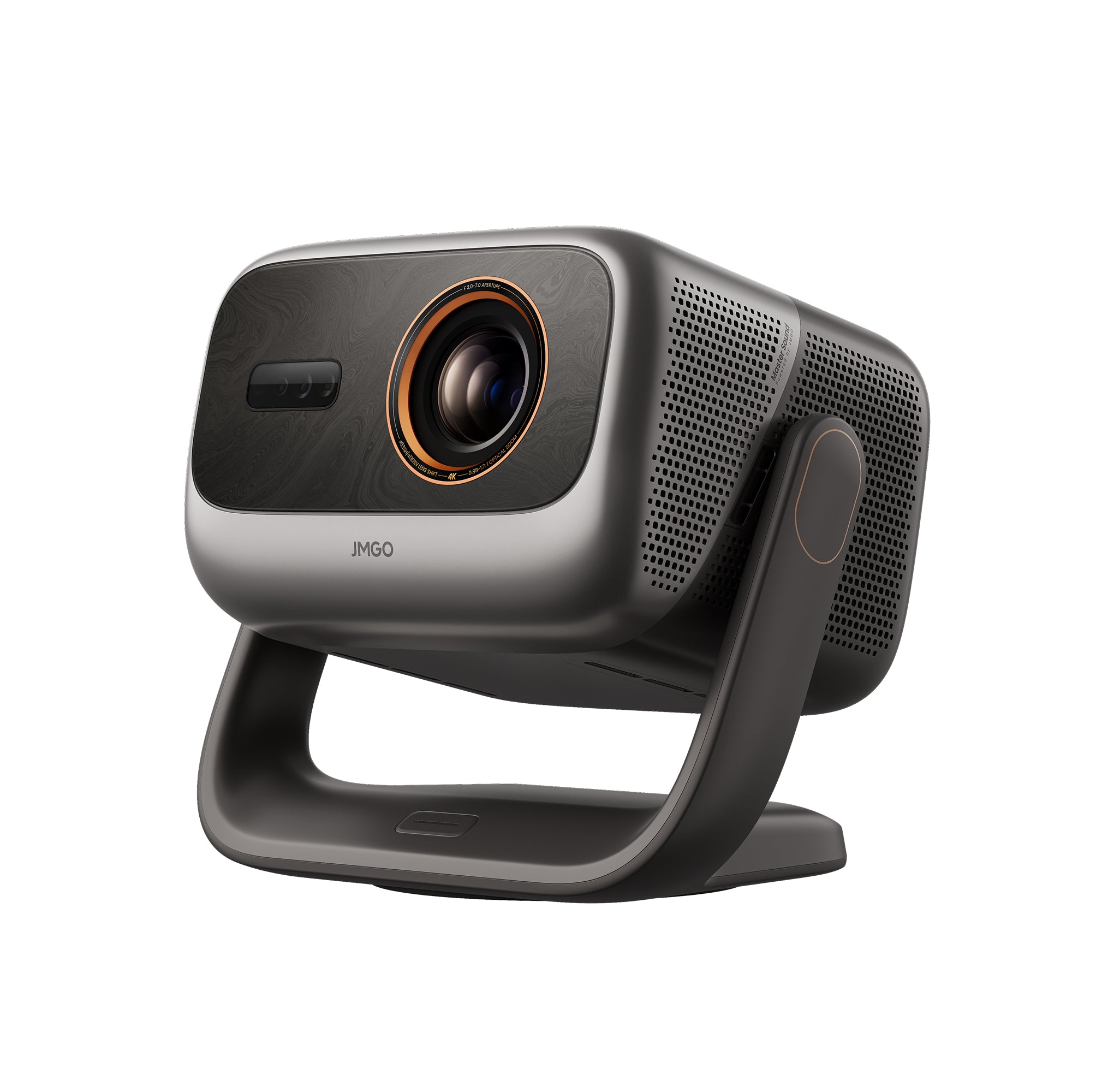
Bright feature-rich projector built around effortless placement.
- Exceptional brightness
- Flexible gimbal, zoom and lens shift
- Vivid triple-laser color
- Strong output for mixed-room and HDR viewing
- Contrast and black levels trail dedicated cinema projectors
- HDR tone mapping and highlight detail are only moderate
- Sharpness and motion are weakened by 24p judder
The JMGO N3 Ultimate combines exceptional brightness, vivid triple-laser color and one of the most flexible gimbal-based setup systems available. Its motorized zoom, lens shift and Google TV integration make large-screen movie nights unusually easy to configure, while the strong light output gives HDR and mixed-room viewing substantial visual impact.
Lab measurements show the N3 Ultimate is exceptionally bright with rich color. Movie motion is a significant weakness because 24p playback can remain juddery, and black depth is modest beside dedicated cinema projectors.
The N3 Ultimate is relatively new and long-term owner evidence is limited despite a solid-state laser light source.
- Buyers who want dedicated-cinema contrast and black levels.
| Light source | Triple laser |
|---|---|
| Mount | Integrated gimbal |
| Lens | Motorized zoom and lens shift |
| Smart platform | Google TV |
How We Evaluate Home Theater Projectors
Our rankings are built through the Flickthru CORE™ Market Research Engine, which first analyzes the category, its intended buyers, and the current US market. Products are then compared using category-specific evidence rather than a generic checklist applied the same way to every product type.
For home theater projectors specifically, the evaluation focuses on the dimensions that most directly affect real-world performance, everyday usability, ownership experience, and long-term value:
- Contrast and black levels: We assess black depth, shadow detail and real-scene contrast so movies retain dimensionality instead of looking gray or washed out.
- HDR and tone mapping: We judge how convincingly HDR movies balance bright highlights with shadow detail rather than clipping one end of the image.
- Color accuracy: We assess natural skin tones, grayscale balance and wide-gamut color so films look accurate rather than exaggerated or tinted.
- Brightness and screen fit: We compare usable calibrated light output and uniformity to the screen sizes and room conditions home-theater buyers actually use.
- Detail and motion: We assess sharpness, focus, 24p motion and processing artifacts so films look detailed and cinematic rather than artificially processed.
- Value and total cost: We compare current US price with cinema performance, useful life and realistic setup or replacement costs rather than treating purchase price alone as value.
- Installation and usability: We consider lens placement, setup flexibility, connectivity and everyday controls so the projector fits the room without unnecessary compromises.
- Noise and reliability: We look at fan noise, recurring faults and long-term stability so the projector does not distract from quiet scenes or create avoidable ownership problems.
- Owner validation: We use verified owner feedback to corroborate real-world picture, setup, noise and reliability patterns; review volume changes confidence, not merit.
Products are scored dimension-by-dimension across the same contender field so that the same performance standard is applied consistently to every model. Missing noncritical evidence is left unscored rather than assigned a placeholder score, with the remaining supported dimensions renormalized. Evidence confidence is tracked separately and does not alter product merit.
Documented strengths and weaknesses are cross-checked against the final buyer-facing pros and cons before publication, helping ensure that material scoring findings are reflected in the visible recommendation rather than replaced by generic copy. Read the full Flickthru product ranking methodology.